
Reading about riding technique only gets you so far. The lanes that actually test you don't wait for you to feel ready, so the riders who cope best are usually the ones who've deliberately practised the specific, unglamorous skills beforehand, somewhere it doesn't matter if they get it wrong. This is less about theory and more a straight list of what's worth rehearsing, and where.
Slow-speed control, away from anything that matters
We've covered why technique beats horsepower on a lane in detail elsewhere. The short version worth practising specifically: slow figure-eights, standing on the pegs, in a flat field or empty car park, until walking-pace balance stops feeling like a fight. Almost everything else on a technical lane builds on this one skill.
Stalling and recovering on a slope, deliberately
Every rider stalls on an incline eventually, usually at the worst possible moment. Practising this on purpose, on a gentle grass slope with nothing behind you, takes the panic out of it: find neutral, apply the front brake, get a foot down, and restart without rolling backwards. It takes thirty seconds to learn and it's the difference between a minor pause and a genuine scare the first time it happens for real.
Opening and closing a gate without dropping the bike
Sounds trivial until you're doing it on a slope, one-handed, with the bike balanced on a sidestand that isn't quite level. Worth practising: finding a spot to stop where the bike sits stable before you get off, and getting into the habit of switching the engine off and putting it properly on the stand rather than balancing it on the brake. Leaving every gate exactly as you found it matters for access as much as it does for keeping your bike upright.
Reading a water crossing before you commit
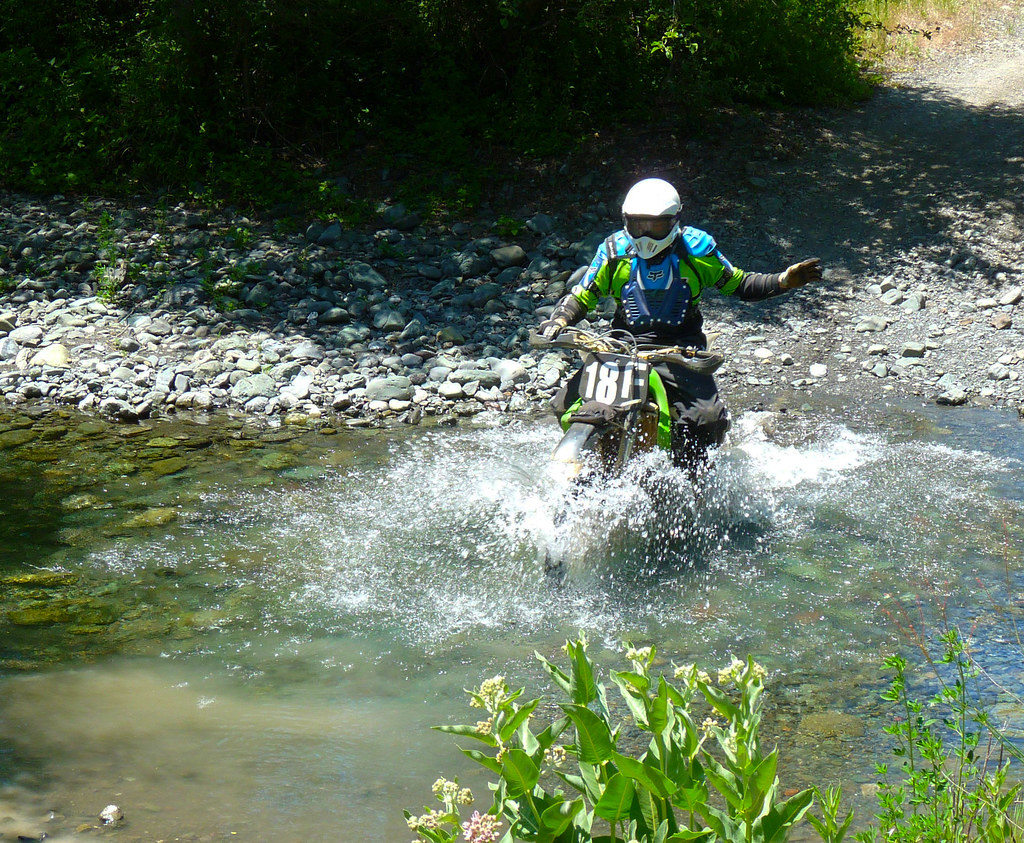
Fords catch out more riders than almost any other single feature on a lane, usually because they're ridden on sight rather than checked first. Get into the habit of stopping before the crossing, walking the entry and exit if you can, and picking a line before you're committed to one. The full detail on judging depth, current and a solid exit point is in our guide to riding a water crossing safely.
Checking a lane before you ride it, not just while you're on it
The best riders do most of their "riding" before they ever leave the house: checking a lane's difficulty and hazards, whether it's currently closed, and what the surface has been like recently. Reading a lane before you commit to it covers exactly how, and it's a habit worth building from your very first ride, not something to pick up later.
Recovering a dropped or stuck bike, on your own
Eventually you'll be the only person there when the bike goes down or bogs in. Knowing the actual technique, rather than working it out under pressure, saves your back and your bike. Our guide to recovering a stuck motorcycle covers it properly, and it's worth reading before you need it, not after.
"The riders who struggle usually aren't missing talent, they're missing reps. Practise the boring bits, the slow figure of eight, the gate, the stall recovery, somewhere it doesn't matter, and the lane itself gets a lot less frightening."
— Mat Stuckey, founder of Holloway
Practice little, practice often
None of this needs a dedicated training day or expensive kit. Ten minutes in a field before a ride, or a deliberate stop-and-check habit on lanes you already know, builds all of it over a season without ever feeling like homework. Holloway's map shows every legal lane's difficulty and hazards for free, so you can pick lanes that actually match where your practice has got you. Holloway Premium, £20 a year, adds full route planning and offline GPX so you can take a properly planned route out and put the practice to use.