
Knowing what's legal to ride is one thing. Knowing how to ride it without causing a problem is another, and it's the second one that keeps lanes open. None of what follows is written into law. All of it is written into whether the next rider gets a warm welcome or a locked gate.
Gates as found, always
If a gate is shut, shut it behind you. If it's open, leave it open. This sounds obvious and it still catches people out, usually because they're thinking about the next section of lane rather than the field behind them.
A gate left open lets livestock wander onto a road. A gate left shut on a field that needed access can trap a farmer's vehicle or block a right of way for the next visitor. Either way, it's the landowner who deals with the consequences, and it's riders who get the blame. This one rule, followed properly every time, prevents more lane closures than almost anything else on this list.
Single file on narrow lanes
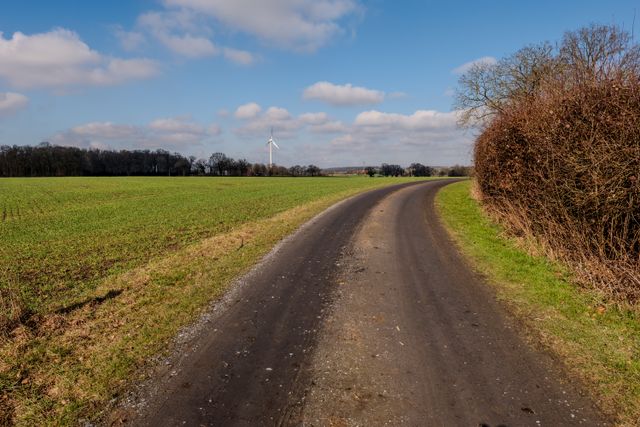
Many green lanes are barely wider than a single vehicle, bounded by hedgerow, bank, or dry stone wall. Riding two abreast, even briefly, churns the verge, damages the edges, and blocks the lane for anyone coming the other way. Keep to single file, keep to the existing track, and resist the urge to widen a rutted line by riding around it. That widening is exactly what turns a narrow lane into a scarred one.
Passing horses at a walk, engine at idle
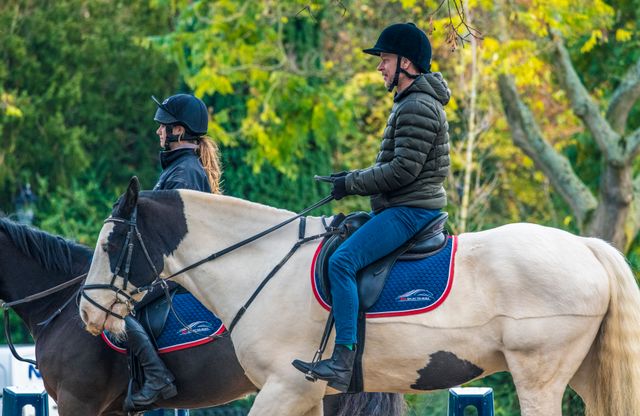
Horses can be genuinely alarmed by motorcycles, and a spooked horse is dangerous for its rider, for you, and for anyone else nearby. When you meet a horse on a lane, slow right down, well before you're close. Drop to walking pace, let the engine settle to idle, and if there's room, pull over and stop rather than easing past.
Take your cue from the rider. Most will wave you through when they're happy to, or ask you to wait if their horse is unsettled. Either way, patience here costs you thirty seconds and buys the entire riding community a lot of goodwill with the equestrian community, who share these lanes and, in plenty of cases, campaign to keep them open.
Passing walkers
Walkers get less drama than horses but deserve the same courtesy. Slow down well before you reach them, give them room, and don't accelerate hard once you're past just because you're clear. A green lane that a dog walker uses every morning is not somewhere to make a point about your bike's power.
A nod or a "morning" costs nothing and does a lot to keep the relationship between riders and everyone else who uses these lanes on good terms.
Why you wave to other lane users, even visor down
You'll see it on almost every lane: riders raise a hand, or nod, to other bikes, 4x4s, and cyclists coming the other way. It looks like a small thing. It isn't. Green laning is a minority use of a shared resource, and the way riders are perceived by everyone else who uses these routes, walkers, horse riders, farmers, other motorists, has a direct effect on whether lanes stay open or get pushed toward closure.
A wave signals that you see other lane users as people sharing the same space, not obstacles in your way. It's a small habit that adds up to a much bigger reputation.
Just because it's legal doesn't mean you should
A BOAT gives you the legal right to ride it. It doesn't mean every version of riding it is a good idea. Gunning it past a group of walkers, doing repeated passes on a lane near a farmhouse, or riding at times when it's clearly busy with horses, all of that is within the letter of the law and still causes exactly the kind of conflict that gets lanes closed through Traffic Regulation Orders.
"The lanes that get closed aren't usually closed because riding them was illegal. They're closed because enough people complained, and the complaints were usually about behaviour, not the law."
— Mat Stuckey, founder of Holloway
Reading a situation and choosing restraint, even when you're entitled not to, is the difference between a lane staying open for years and a lane becoming a case study in why it got shut.
What this culture actually protects
None of these habits exist for their own sake. They exist because green lanes sit in a genuinely fragile position: legally protected, but only as long as the people who use them don't give councils, landowners, or other user groups a reason to push for restriction. Every gate left as found, every horse passed carefully, every walker given room, is a small deposit into a shared account that keeps these routes available to everyone, not just the riders who happen to be out that day.
It's a slower way to ride than treating a lane as a racetrack. It's also the only approach that keeps the racetrack option off the table permanently.
Ride prepared, ride considerately
Holloway shows you every legal green lane in England and Wales for free, with its difficulty, hazards, and current status, so you know what you're riding into before you're on it. Knowing a lane's character in advance, whether it's popular with horse riders, narrow and hedge-lined, or likely to be busy on weekends, makes it much easier to ride it well.
Holloway Premium, at £20 a year, adds full route planning with road-following connectors, GPX export, exact coordinates, live weather, and navigate-to-start, so you can build a considered route rather than guessing your way between lanes. For more on the culture around lanes, read how one inconsiderate rider can close a lane for everyone, and if you're building the skills to match the etiquette, see the skills that matter more than horsepower on a green lane.