
If you've stood at the top of a rutted, greasy lane and felt your stomach drop before you've even let the clutch out, it's not always a skills problem. Half the time it's a bike problem. A huge number of UK green laners are riding something too big, too heavy and too tall for what they're actually doing with it, and it's quietly pushing good people out of the sport before they've had a proper chance to enjoy it.
The Africa Twin and Ténéré effect
I understand why people buy them. You see one in a magazine or on someone's Instagram, loaded up, dust flying, looking like it belongs somewhere between the Atlas Mountains and the Dakar. It's an easy story to want for yourself. And to be clear, these are genuinely excellent machines. An Africa Twin or a Ténéré 700 will cross a continent, handle motorway miles all day, and still get stuck into proper off road terrain when it's set up right.
The problem is that most UK green laning isn't a wide open Moroccan piste. It's a single track farm lane with a stone wall six inches from your bar end. It's a gate you have to muscle the bike through at walking pace, on a camber, with a hedge on one side. It's a rut that appeared last week and nobody's told you about it yet. That kind of riding rewards being able to paddle the bike about, dab a foot, correct a slide and pick a line through something narrow. It doesn't reward outright power or a fairing built for three figure motorway speeds. A lot of the bikes people buy for green laning were actually designed for a different kind of adventure riding altogether.
What being overbiked actually costs you
This is the bit that gets missed. People assume that if they're struggling on a lane, it must mean they're not good enough yet. Sometimes that's true. But a huge amount of the time, it's simply that the bike underneath them weighs more than they can comfortably manage in the conditions they're in.
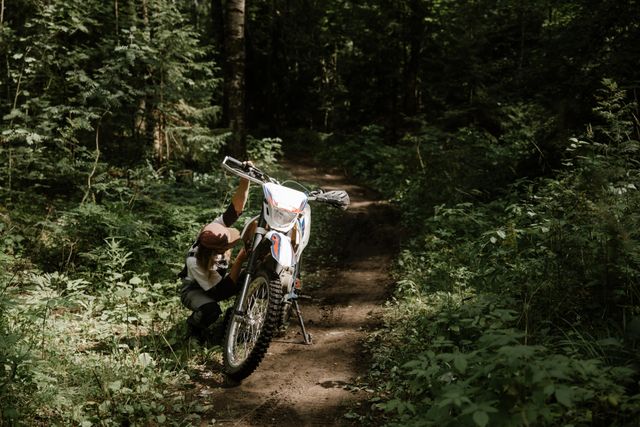
Picking up a 230kg bike on your own, on wet grass, on a slope, after you've already dropped it twice that day, is genuinely hard physical work. It's how backs get tweaked and ankles get twisted, not from the crash itself but from the recovery. And the mental side matters just as much. Once someone's had a couple of drops on a bike that's a real struggle to lift, the fun drains out of a day pretty quickly. Confidence goes, tension creeps into the riding, and tense riding is exactly what causes more drops. It becomes a loop. I've watched people ride themselves right out of enjoying it, then out of the sport altogether, and blame themselves for it when the honest answer was that they were never fighting a fair fight.
A quick weight reality check
People fixate on horsepower and forget the number that actually matters most when a bike goes over in a rut with your leg half under it. You can check the same comparison for dozens of bikes, real weight, seat height and a computed green-lane suitability score, in Holloway's Bike Finder.
| Bike | Roughly | What that means on a lane |
|---|---|---|
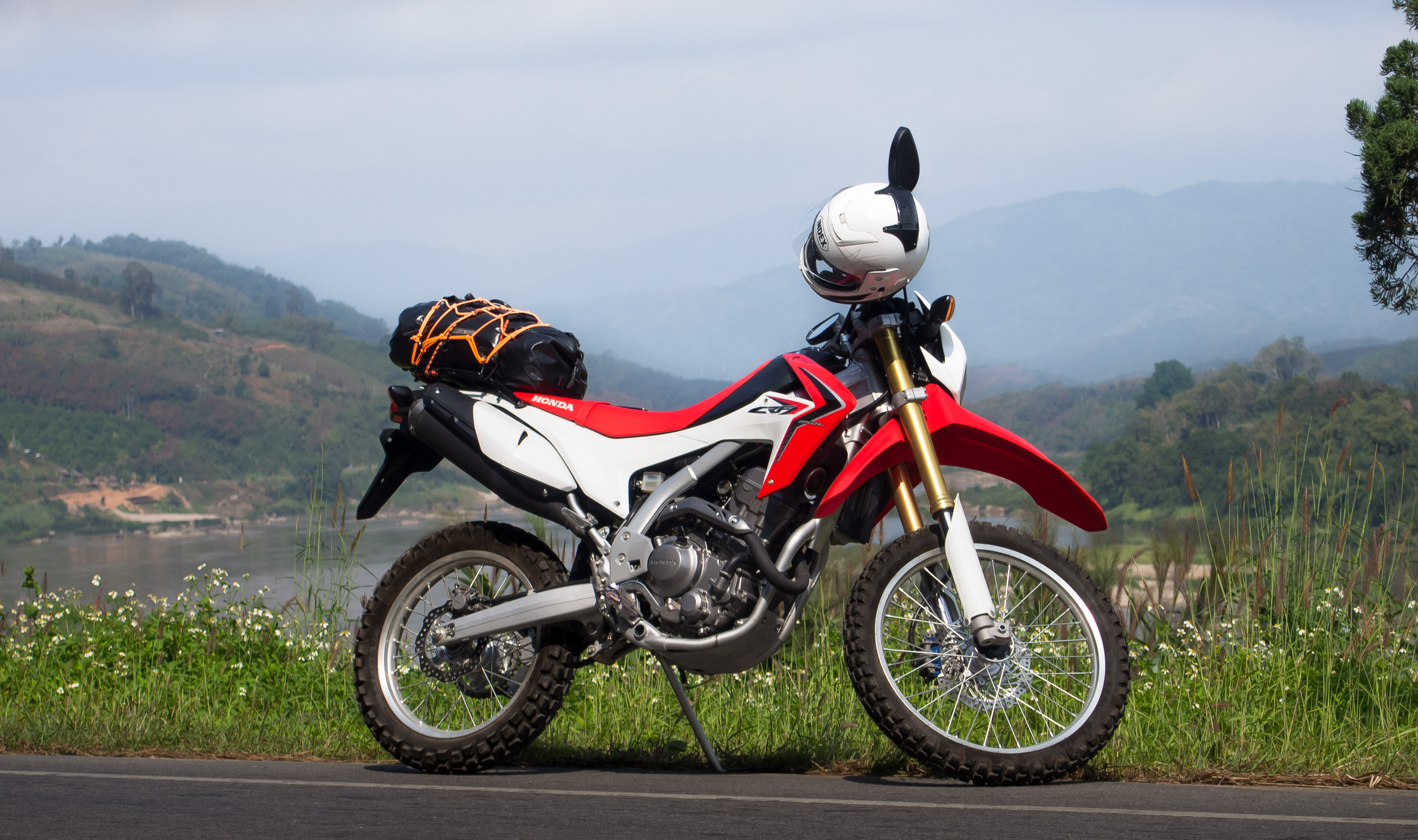
| Honda CRF300L | 140kg wet | One person can lift it, tired, on a slope, without help |
| Yamaha Ténéré 700 | 208kg wet | Manageable for a fit, practised rider, hard work by the end of a long day |
| Honda Africa Twin | 231kg wet | A genuine two person lift once it's properly down in a rut |
That's not a small gap. It's nearly the weight of an entire extra adult sat on the bike. On tarmac you barely notice it. On a slippery, off camber lane, it's the difference between a wobble you correct without thinking and a full drop you're now recovering from alone.
Real riders, real lanes
I was out near a green lane in the Peak District a while back and got chatting to a fella at the entrance who'd stopped for a breather before he'd even started. Big BMW GS 1250, decent kit, clearly not new to riding. He looked at the lane, looked at the mud, and said "I don't think so today", and turned round. And that's the actual issue right there. He missed out on a genuinely fantastic lane, not because he wasn't capable, but because the fear of dropping a bike that size, or not being able to cope with the terrain underneath it, made the decision for him. The irony is he'd have had more fun on something lighter, not less. You fly down lanes like that on a smaller bike, quicker and more relaxed, rather than picking your way through them worrying about what happens if it goes down.
I remember another time, there was a rider who was completely at home on the road, smooth, confident, no issues at all. Put her on a loaded Ténéré for a steep, loose climb and it was a different story entirely, not because her technique was wrong but because she was fighting the bike as much as the hill. She borrowed a much lighter trail bike from another rider for the last hour of the day and the change was obvious to everyone watching, not just her.
I'll put my hand up here too. Years ago I bought a big adventure bike because that's what I thought a proper green laner rode. Took it to some of my regular local lanes and found myself working harder than I was enjoying myself, particularly on the tighter, wetter stuff I rode most often. Swapping down to a Voge 300 Rally for those specific rides was one of the better decisions I've made for how much I actually get out on the bike.
And at a meet up not long ago, someone mentioned almost in passing that they'd sold their bike after one season because they'd spent more of most days lifting it than riding it. Nobody in that conversation thought it was a skills issue. Everyone just nodded, because most of us have either been there or watched someone go through it.
The case for smaller capacity bikes
This is where I'll say something that might not be popular in every corner of the adventure bike world, but I believe it: for the vast majority of UK green laning, a smaller, lighter bike will make you a better, happier, safer rider than a big adventure bike will, and it isn't close.
I'm not alone in thinking this either. Nathan the Postman, whose take on trail riding I agree with more often than not, has built a lot of his own riding and touring around exactly this idea, that a smaller, lighter bike gets you further and keeps you happier than the biggest adventure bike you can afford.
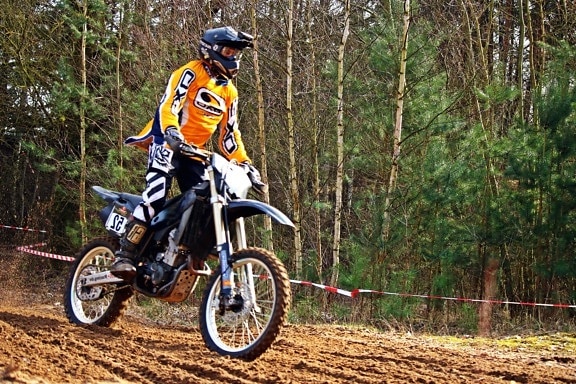
Bikes like the CRF300L and CRF300 Rally, the KTM 350 EXC-F, or something like a Voge 300 Rally or a Kawasaki KLX300, let you actually ride the terrain instead of managing the bike's mass through it. You can paddle through a tricky section without your legs giving out. If it does go down, you're not calling a mate over for a two person lift, you're picking it up yourself and getting on with the day. That single fact changes how confidently people ride, which changes how much they enjoy it, which is the whole reason most of us do this in the first place.
None of this means big adventure bikes are bad bikes. They're brilliant at what they're actually built for, which is mostly road miles, gravel tracks and wide open trails where their comfort and stability are a genuine advantage. It's the mismatch with tight, technical, UK specific lanes that causes the trouble, not the bikes themselves.
Quick self check, are you overbiked?
- Can you lift your bike alone, from wet grass, on a slope, near the end of a long day, without help?
- Are there specific gates, ruts or climbs you dread purely because of the bike's weight rather than the terrain itself?
- Are you already avoiding certain lanes because you know a drop there would be a genuine struggle to recover from?
- When you picture your ideal day out, is the bike part of the fun, or something you're constantly managing?
If you answered honestly and didn't love your answers, that's useful information, not a criticism.
Already committed to a big ADV? Here's what actually helps
- Strip it down for lane days. Panniers, screen, anything you don't need off. Every kilo you remove is a kilo you're not lifting later.
- Get proper off road specific training on your actual bike, not a generic course on a lighter loan bike that won't teach you how your bike behaves when it's heavy and off balance.
- Fit proper off road tyres for the conditions you're actually riding in, most drops happen because of grip, not power. Holloway's Tyre Finder is worth a look before you buy.
- Ride with people who'll help you lift, and don't be embarrassed to ask. Everyone's dropped a bike.
- Consider running two bikes if you can, the big one for touring and road miles, something smaller and lighter kept purely for lane days.
My take
I'd rather see someone properly enjoying every lane on a smaller bike than white knuckling their way around on something that looks the part but is working against them. Green laning should be genuinely accessible, not something that quietly filters out anyone who isn't strong enough to wrestle a 230kg bike back upright on their own. If you're finding yourself dreading days out, or you keep getting hurt in ways that feel more like bad luck with the bike than bad riding, it's worth asking honestly whether the problem is you, or whether it's just the bike underneath you.
If you're working out what to buy or borrow next, we've put together a beginner's guide to choosing your first green lane bike, and it's worth reading our route difficulty ratings explained before you commit to a lane that might be more than your current bike can handle.