 Tyre Finder specs
Back to the app
Tyre Finder specs
Back to the app
First-hand review · 500 miles on a Voge 300 Rally
I swapped to a 50/50 tyre for better road manners, then a few proper British downpours sent me straight back to knobblies. After 500 miles on Michelin Trackers, they've changed my mind about what I actually want from a green-laning tyre.
 By Mat StuckeyFounder of Holloway, rides everything he reviews
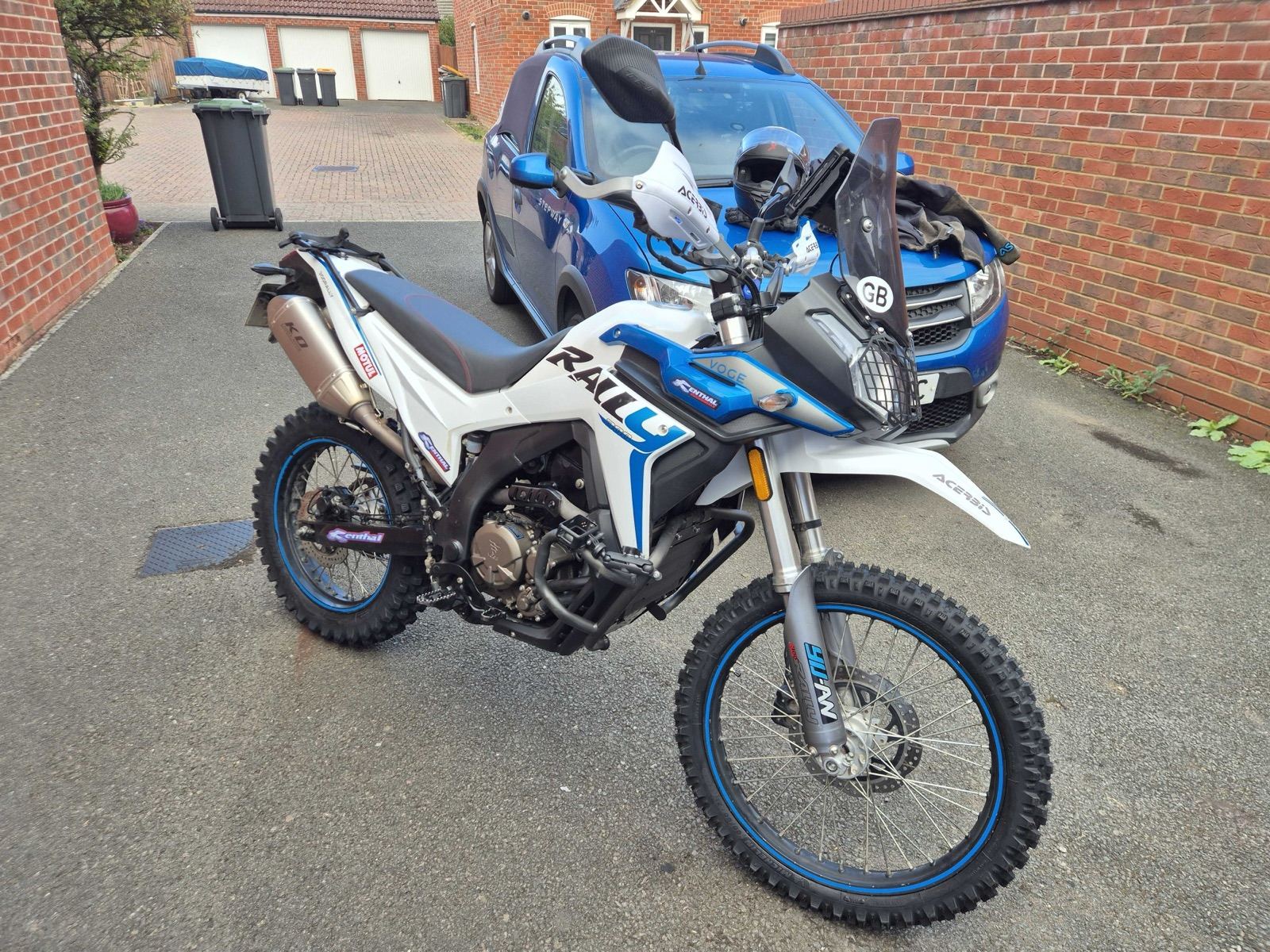
I've now done around 500 miles on Michelin Trackers on my Voge 300 Rally, the same bike I use to grade lanes for Holloway. Before these, I'd swapped the bike's Kenda K760 Trakmasters for Michelin Anakee Wilds, because I wanted slightly better road manners between lanes. At first that seemed like the right call.
Then we had a few proper British downpours, and the weather exposed the problem with running a 50/50 tyre for genuinely muddy UK off-roading. They just don't like mud. The front loses confidence, the rear starts searching for traction, and suddenly you're riding the trail thinking about the tyre rather than the trail. So I picked up a set of Trackers at a good price and went back to knobblies.
After living with them for a while, I'm very impressed.
The move to Anakee Wilds was never about turning the Voge into a road bike. I just wanted a bit more comfort and confidence on the road sections between lanes. The Trakmasters were brilliant off-road, but pretty agricultural on tarmac, so the Anakees made sense. Until it rained. Then I remembered why I'd had Kendas in the first place.
British green laning isn't the off-roading you see in most adventure-bike marketing. We don't have endless dry gravel trails. We have mud, slop, ruts full of water, wet grass, clay, and occasionally something that looks more like a flooded ditch than a road. A 50/50 tyre can be absolutely fine on a dry trail, but when things get properly wet the difference is enormous. The Anakee Wilds would get me there, but I was constantly aware the front wasn't happy, and once you lose confidence in the front off-road, the whole experience changes.
The first few miles weren't inspiring. They reminded me a lot of the Kendas: the bike felt a little divey, a little wobbly, noticeably less planted on tarmac and noisier. If you've spent a few hundred miles on road-biased tyres and then fit Trackers, you know about it.
There's a fair amount of road noise too. But honestly, I don't care. They're knobblies. If I wanted silent tyres that felt like a road bike, I'd fit road tyres. And it isn't obnoxious: you hear them, but it's not like riding around with helicopter blades on the wheels.
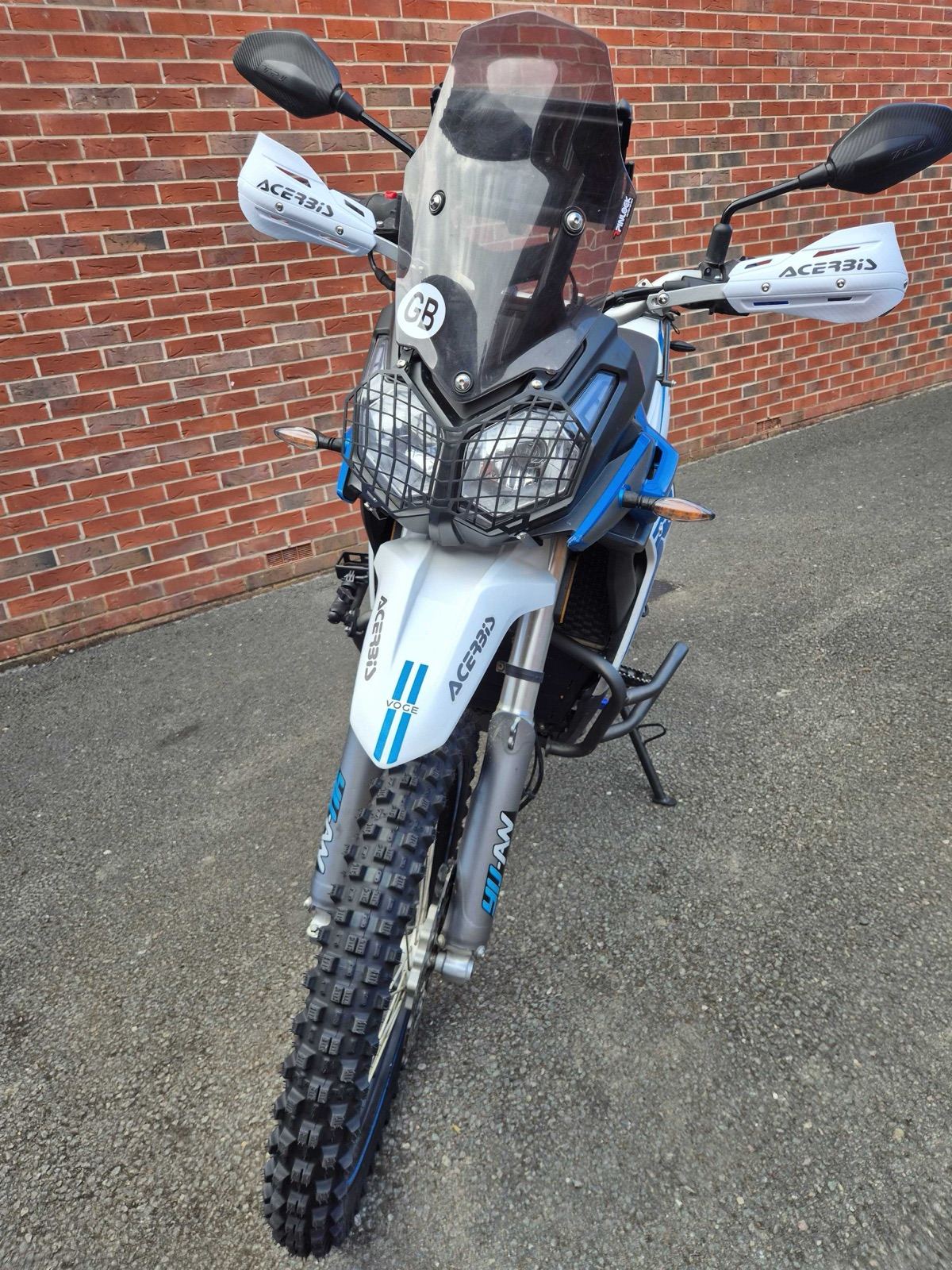
This is where the Trackers immediately made sense. The bike just went where I pointed it. The front digs in, the rear finds traction, and the bike feels predictable on loose, muddy or rocky ground. Instead of wondering whether the tyre is about to let go, I'm thinking about the actual trail. That's a massive difference, and the Trackers gave me that confidence back almost straight away.
A view of the Tracker front tyre on the Voge, riding an easy green lane.
This was the biggest surprise. The first few rides had me wondering whether I'd made the right decision, but after roughly 50 miles the front felt noticeably more settled. The divey feeling faded and the bike became much more predictable in corners.
In fact, I now prefer the Trackers on the road to the Kendas, which I didn't expect. You can lean the Voge into a bend without that constant feeling that the front is about to fall into the corner. It's still a knobbly and it doesn't handle like an Anakee Wild, but for a proper off-road tyre, the road manners are surprisingly good once there are some miles on them.
The Trackers are fantastic in mud. But I'd still give the Kenda Trakmaster a tiny advantage in really horrible mud and slop. It isn't a big difference, and it's nowhere near enough for me to switch back, but when things get properly disgusting I think the Kendas have that little bit more ability to claw through.
That matters, because it's something tyre comparisons often skip: there isn't a perfect tyre, and you always give something up somewhere. The Trackers are the better all-round tyre for the way I use the Voge. If maximum traction in horrible mud was all I cared about, I'd probably still be looking at Kendas.
The Trackers don't turn into a road tyre when it rains. Knobblies don't work brilliantly on wet tarmac, and that's part of the deal. So I don't try to ride around it. If it's wet, I slow down. Some corners get taken in what I'd affectionately call granny gear, sitting bolt upright and letting the tyre do its thing.
That's absolutely fine, because the trade-off is that when I leave the road and hit a proper trail, I can keep riding.
I've got nothing against 50/50 tyres. They're brilliant if they suit what you actually do. But it's easy to look at an adventure tyre and think "it's designed for off-road adventure, so it'll be good off-road." Not necessarily. There's a huge difference between a dry gravel track and a wet British green lane that's turned into a trench of mud.
If your off-roading is mostly hard-packed tracks, gravel and dry trails, something like the Anakee Wild makes a lot of sense. If you regularly ride muddy UK lanes through autumn and winter, be honest about your priorities. For me, I'd rather put up with a noisy knobbly on the road than compromise the tyre when I get onto the lane.
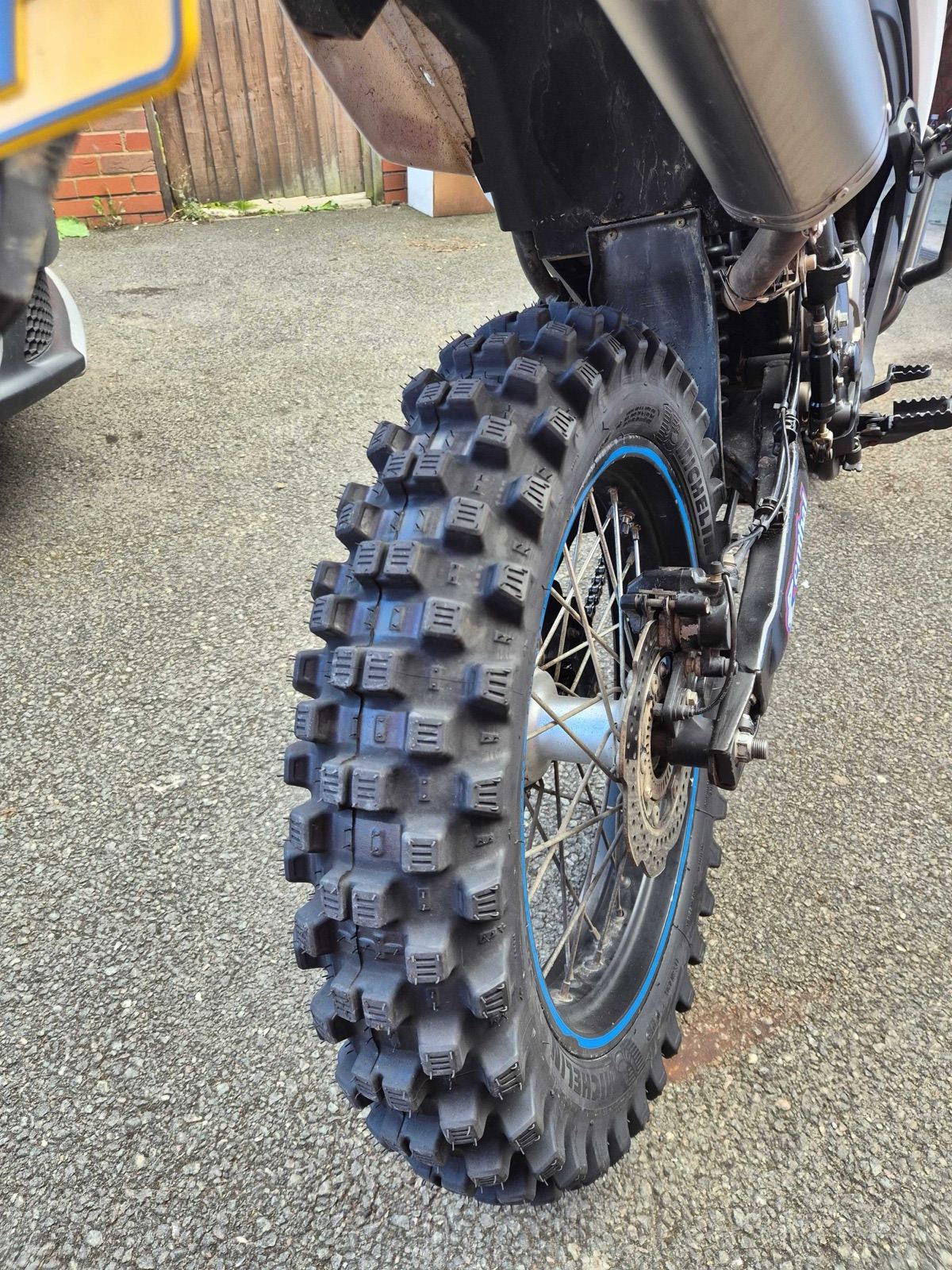
The front still looks practically new. There's very little obvious wear and I expect it to last considerably longer than the rear. The rear is starting to show wear. Nothing concerning, but you can see it's been working.
Based on what I'm seeing now, I'd expect roughly 2,000–2,500 miles from the rear and potentially around 4,000 from the front. That's an estimate from my own riding and the wear at 500 miles, not a promise, and I can't give you an exact lifespan from one set. But so far I'm happy with it.
This is the most useful comparison for me, because I've used both extensively on the same bike.
| Michelin Tracker | Kenda Trakmaster | |
|---|---|---|
| Mud | 4.5/5 | 5/5 |
| Loose terrain | 5/5 | 5/5 |
| Rocks | 5/5 | 4.5/5 |
| Road manners | 4/5 | 3/5 |
| Wet road | 2/5 | 2/5 |
| Noise | 3/5 | 2.5/5 |
| Expected rear life | ~2,000–2,500 mi | ~1,500–2,000 mi |
| Value | 4.5/5 | 5/5 |
My own scores out of 5, from riding both on the Voge 300 Rally. The stronger of the two is highlighted.
The Kendas are still ridiculously good value. They were a budget buy that worked extremely well off-road, and because they were so cheap I didn't really care that they wore quickly. I could buy two or three sets for roughly what some premium tyres cost.
But the Trackers are only about £15 more per tyre for me. If they give me 50% more mileage, or close to double depending on how the rear keeps wearing, that starts to look like a much better deal.
For my riding, there's no contest.
For the riding I do, the second list matters more. I don't need my tyres to be brilliant for the 20-minute road section between two lanes. I need them to be brilliant when I actually get onto the lane.
Absolutely. I'd love to see something like the Mitas Dakar approach applied here: a slightly firmer compound that could give 3,000–4,000 miles from a rear. You can't change the compound without changing something else, and more longevity usually means a compromise somewhere. If I were doing a lot of road miles, I'd happily give up a little outright grip for a lot more mileage. But I'd still want it to keep the fundamental character of the Tracker, and that's the difficult bit.
Riders who are mostly off-road but use roads to link lanes, ride muddy UK green lanes regularly, want proper front-end confidence, and ride a lightweight trail or adventure bike. You'll need to live with the noise and accept that wet-road grip won't be amazing.
Anyone who spends 80% of their riding on tarmac. They won't make your bike nicer on a wet motorway either, but that's not what they're for.
I stop thinking about my tyres when I'm riding off-road.
I'm not worrying about the front washing away, looking for the driest line on the trail, or wondering whether the rear will find traction. I point the bike where I want it to go and ride. That's what a good off-road tyre should do.
My verdict
It's noisy, it isn't impressive on wet tarmac, the rear won't last forever, and the Kenda Trakmaster can arguably find a little more grip when things get truly horrible. But as a package, I really like it. It's far more capable off-road than the 50/50 tyres I've tried, and surprisingly manageable on the road once scrubbed in. I'd rather ride a few miles of tarmac on a noisy knobbly, take a couple of wet corners like a pensioner, and arrive at the trail with the right tyre underneath me. At about £15 more per tyre than the Kendas, if my mileage estimate holds up, I'll keep buying Trackers. Great tyre. Recommended.
Browse legal green lanes and byways across England and Wales, filtered by difficulty, on Holloway's map.
Open the mapThis is a genuine first-hand ownership review, not a manufacturer-supplied test. Wear figures are my own estimate from 500 miles, and your own experience may vary with pressure, riding style and the bike it's fitted to.