 Reviews
Back to the app
Reviews
Back to the app
Camera & filming kit review
Buy it for what it actually is, a tiny flying cameraman for green lanes and slower adventure riding, and it's brilliant. Buy it expecting a drone that reliably chases a motorcycle at 40 or 50 mph, and you'll outgrow it fast.
 By Mat StuckeyFounder of Holloway, rides everything he reviews
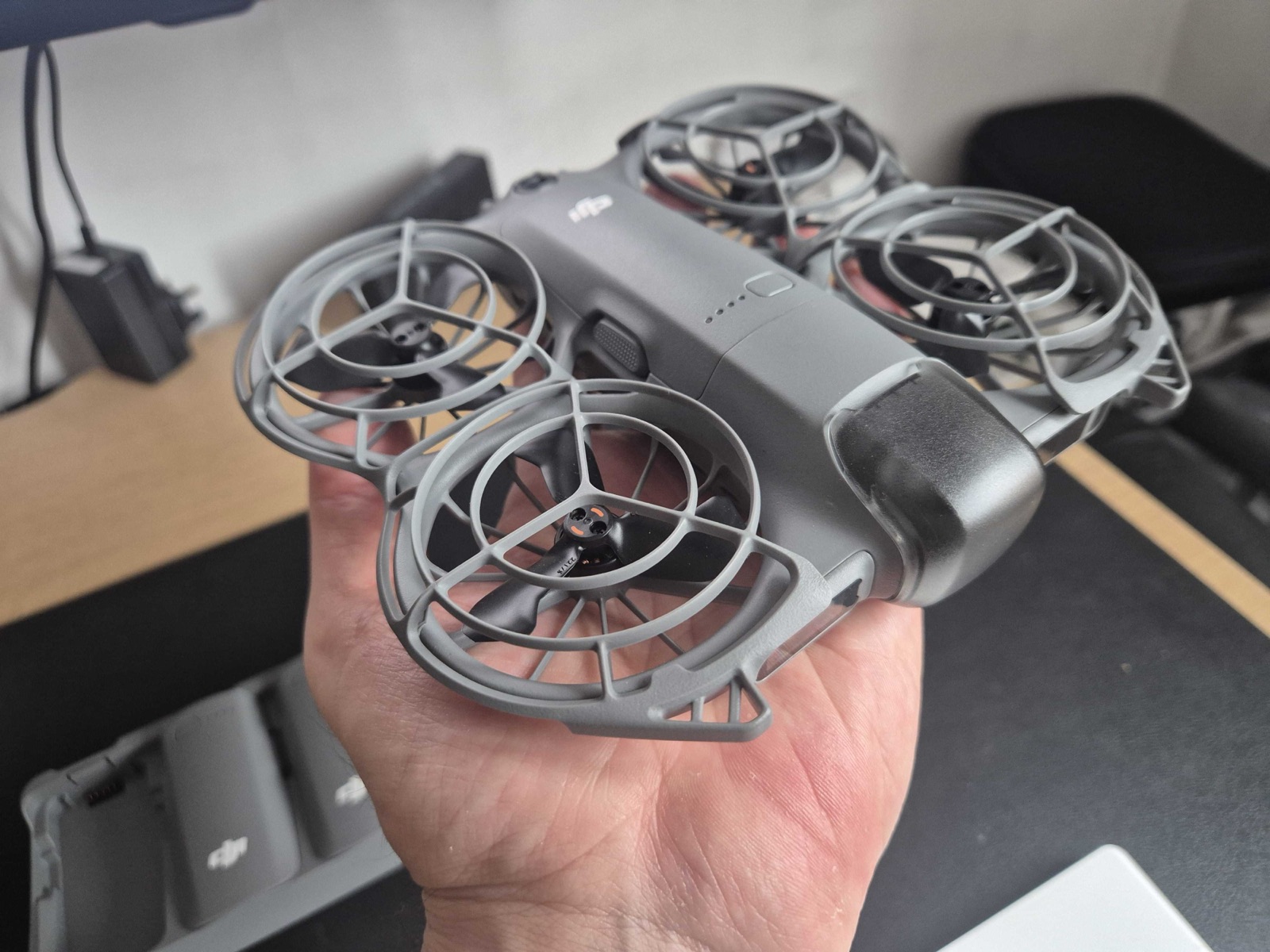
If you ride motorcycles and make your own videos, the pitch behind the DJI Neo 2 is an easy one to like: a drone small enough to live in your jacket, launched from your palm, that then follows you down a trail on its own. Effectively a cameraman who doesn't need paying or persuading to come out on a Sunday, which matters when a chunk of what I film ends up as real ridden-lane content for Holloway itself.
Having used mine to film motorcycle riding, including a proper test on an open UK green lane, that's genuinely close to what it delivers.
There's one real caveat worth knowing before you buy one, though: it's excellent at slower riding, and its limits start showing the moment you push much past 20 mph.
Launched from hand, set to follow, filming a real ride along a farm track. Watch what happens once the bike pushes past roughly 20mph: the drone starts to drop back, but keeps tracking and closes the gap again once the pace settles.
This is where the Neo 2 makes sense for a rider specifically, rather than a drone hobbyist who also happens to ride. You don't need to know how to fly one. You don't need a controller in your hand, and you don't need a mate standing at the roadside operating a camera for you.
Launch it, pick follow mode, get on the bike, ride. Compare that to the usual alternatives for external motorcycle footage: bringing another rider, stopping to rig a static camera, or spending considerably more on a proper cinematic drone and someone to fly it. The Neo 2 skips most of that entirely, and it's the single thing I rate it most highly for.
Ease of use gets a straight 10 out of 10 from me. It's the sort of product that makes you wonder why this wasn't the standard years ago. Other riders and mountain bikers testing it report the same thing, the automatic tracking is a real step up from the original Neo, and being able to fly it without turning a ride into a full production is the headline feature.
For something this small, the recording quality is genuinely impressive, 4K at up to 60fps with RockSteady stabilisation baked in, which means footage that's actually fit to publish rather than something that reads as a novelty.
That matters for motorcycle content specifically. You don't need every shot to look like a film production, you need a different angle. A wide shot of yourself riding a lane, climbing a rise or picking through a rough section adds something a helmet or bar-mounted camera simply can't, and the Neo 2 delivers that shot with almost no setup: launch, ride, get it, land, pack it away. Nothing like the faff of a full drone kit with a separate controller.
This is the one thing I'd flag to any rider thinking about buying one. DJI's headline tracking figure is around 12 m/s, roughly 27mph, with a dedicated bicycle-tracking mode, and independent tests have shown it genuinely holding 18-20mph and sometimes more in the right conditions. But keeping up with a bicycle at that speed and keeping up with a motorcycle accelerating hard are two different jobs.
My own test on an open farm track backs that up. At sensible trail-riding pace it tracks brilliantly and the footage looks great. Push past roughly 20mph, though, and you can visibly see it start to lose ground, not lose you outright, just fall behind as the bike pulls away. A bicycle builds speed gradually; a motorcycle can go from a gentle pace to 30 or 40mph in a couple of seconds, and that kind of acceleration is a much harder ask for a drone this size.
Other real-world tests land in the same place. One e-bike review found it comfortable around 18.6mph but starting to lag as speed pushed toward 24mph. A separate motorcycle test reported solid tracking near 18mph, with things getting noticeably less predictable as speed and obstacles both increased.
Yes, and this is arguably its best use case. Most UK green lanes get ridden at 10-20mph, exactly the window where the Neo 2's tracking is genuinely reliable, and you're not constantly testing the edge of what it can do.
Green laning also isn't about outright speed anyway, it's ruts, mud, gates, puddles, loose surfaces and constantly changing ground, and the Neo 2 captures that well without needing you to find somewhere sensible to land a full-size drone every few minutes. Finish the section, bring it back, carry on.
The Neo 2's sensing is meaningfully better than the original, and it will genuinely react to obstacles in its path rather than just being a small camera flying blind. That's not the same as being crash-proof, though. Other owners have already found that dense trees and branches can still catch it out, and one mountain biker specifically noted that the faster tracking means it can hit something harder when it does misjudge.
That's enough to make me cautious on a tight, heavily wooded lane. An open farm track is one thing, a narrow trail boxed in by branches is a different risk entirely. It's a clever bit of kit, not a magic one.
Worth being realistic here. If the plan is riding a road at 40, 50 or 60mph with a drone alongside getting cinematic tracking shots, this isn't the tool for that job, and it was never really built to be. At those speeds you're dealing with real wind resistance, sharper acceleration and braking, bigger distances and a lot less room for error.
People have pushed it harder than this and got usable footage, but that's not the same as it working reliably every time. My own sweet spot is slower, technical trail riding, which suits me fine, since that's exactly what I bought it for.
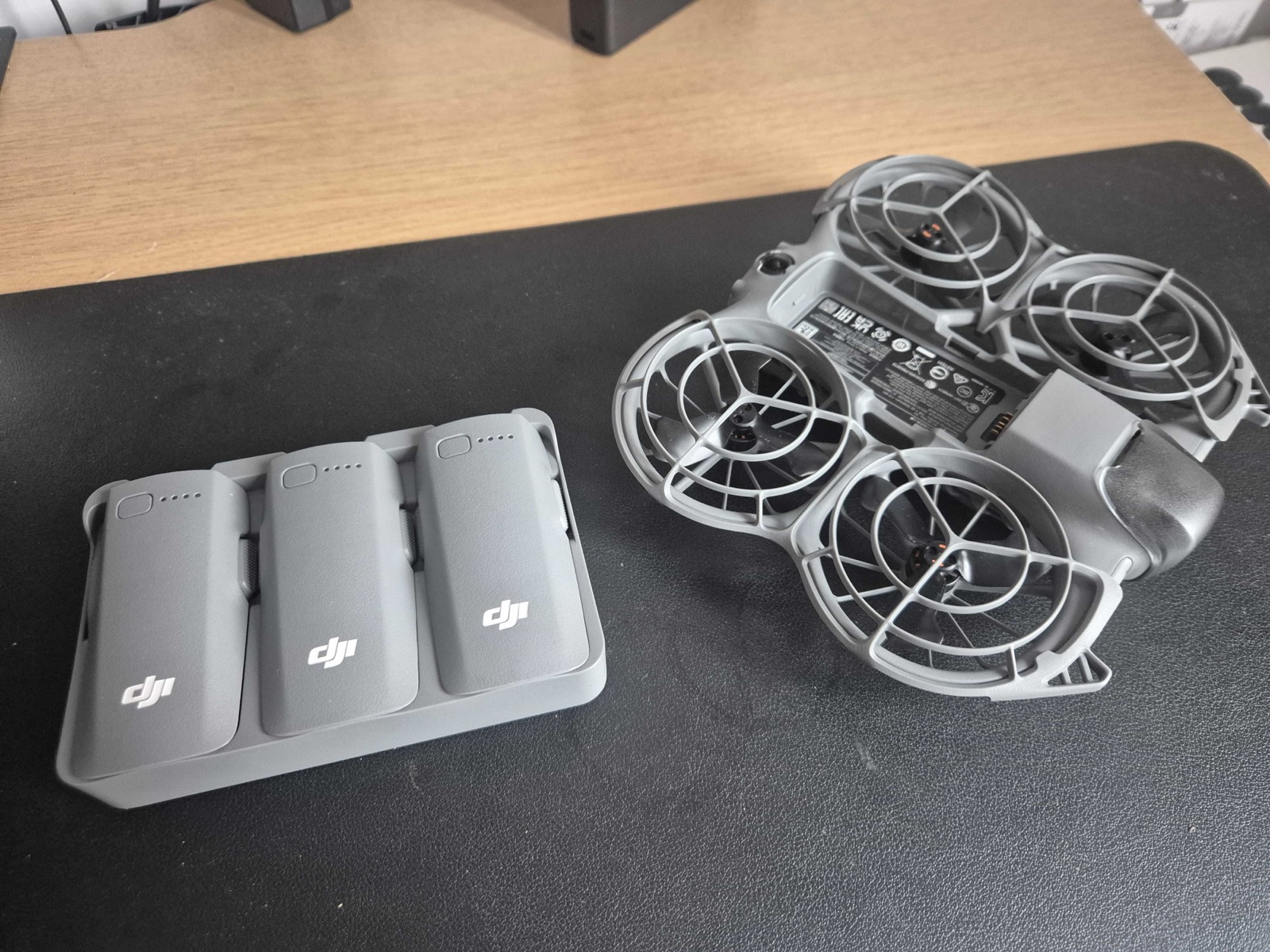
This isn't a drone you launch and leave flying for a whole day's ride, its size means flight time per battery is genuinely short, closer to a quick filming burst than sustained aerial coverage. That's fine by me, I never expected it to follow me for hours anyway. The pattern that works is simple: pick a section, launch, get the shot, land, move on. It's a different way of thinking about filming than carrying a drone meant for continuous footage, and it suits how I actually ride.
For motorcycle content specifically, the Neo 2 fills a gap nothing else in my kit bag does. Between a helmet camera, an action camera on the bike and maybe a 360 camera, none of them can actually get you outside the bike, and none of them can do it without a second person operating the shot. The Neo 2 does both.
I've owned plenty of cameras where the limiting factor was never image quality, it was how much effort it took to actually get the footage. This one removes that problem almost entirely: spot a good stretch of trail, launch it, ride through, you've got the shot.
Three things worth keeping in mind. Speed: past roughly 20mph, don't assume the tracking stays perfect, it can do more in the right conditions but motorcycle acceleration and wind both work against it. Obstacles: the improved sensing is genuinely good, but I wouldn't trust it blindly in dense woodland or a tight, overgrown trail. Battery life: it's built for short filming bursts, not all-day coverage. None of these are dealbreakers for me, they're just the actual limits of what it is.
Green lanes, farm tracks and slower technical trail riding, where you want a real external shot without a second rider or a full drone kit.
Fast road filming, or expecting reliable cinematic tracking anywhere north of about 20mph.
My verdict
Buy it for a tiny flying cameraman that covers green lanes, farm tracks and slower adventure riding, and it's brilliant. Expect it to chase a motorcycle down a road at 40 or 50mph and you'll outgrow it fast. For the riding I actually do, the trade-off makes complete sense, and it's small and easy enough that I genuinely carry it, which matters more than owning something technically better that stays at home.
I bought the Fly More combo specifically for the extra batteries, given how short a single charge lasts, it's worth the difference in price.
Buy the DJI Neo 2 Fly More ComboThis is an affiliate link. If you buy through it, Holloway earns a small commission at no extra cost to you, which goes straight toward keeping the site and the map running. It has no bearing on what's written above, this is the same review either way.
Browse legal green lanes and byways across England and Wales, filtered by difficulty, on Holloway's map.
Open the mapThis is a genuine first-hand review, not a manufacturer-supplied test. Your own results may vary with conditions, terrain and how the drone's flown.