 Bike Finder
Back to the app
Bike Finder
Back to the app
Long term review · 11,000 miles, UK and Europe
The TRK 502 X looks like an adventure bike, spoked wheels, big 19″ front, crash protection, imposing stance. After 11,000 miles I wouldn't call it a serious off-road motorcycle. I'd call it something much more useful: a bloody good all-rounder.
 By Mat StuckeyFounder of Holloway, rides everything he reviews
I've now put around 11,000 miles on my Benelli TRK 502 X, and at this point I've got a pretty good idea of what this bike is actually good at, and perhaps more importantly, what it isn't.
I've used mine primarily for touring, long road trips and the occasional light gravel track or ACT-style route. I've taken it away from the tarmac plenty of times, but I've never tried to pretend it's a lightweight trail bike. That distinction matters, and it runs through everything below.
Yes, and that probably tells you most of what you need to know. The TRK 502 X isn't perfect, there are things about it that remind you you're riding a relatively inexpensive motorcycle rather than a premium Japanese or European adventure bike. But it's incredibly easy to live with: comfortable, economical, capable on the road, loaded with equipment for the money, and mine has been extremely dependable.
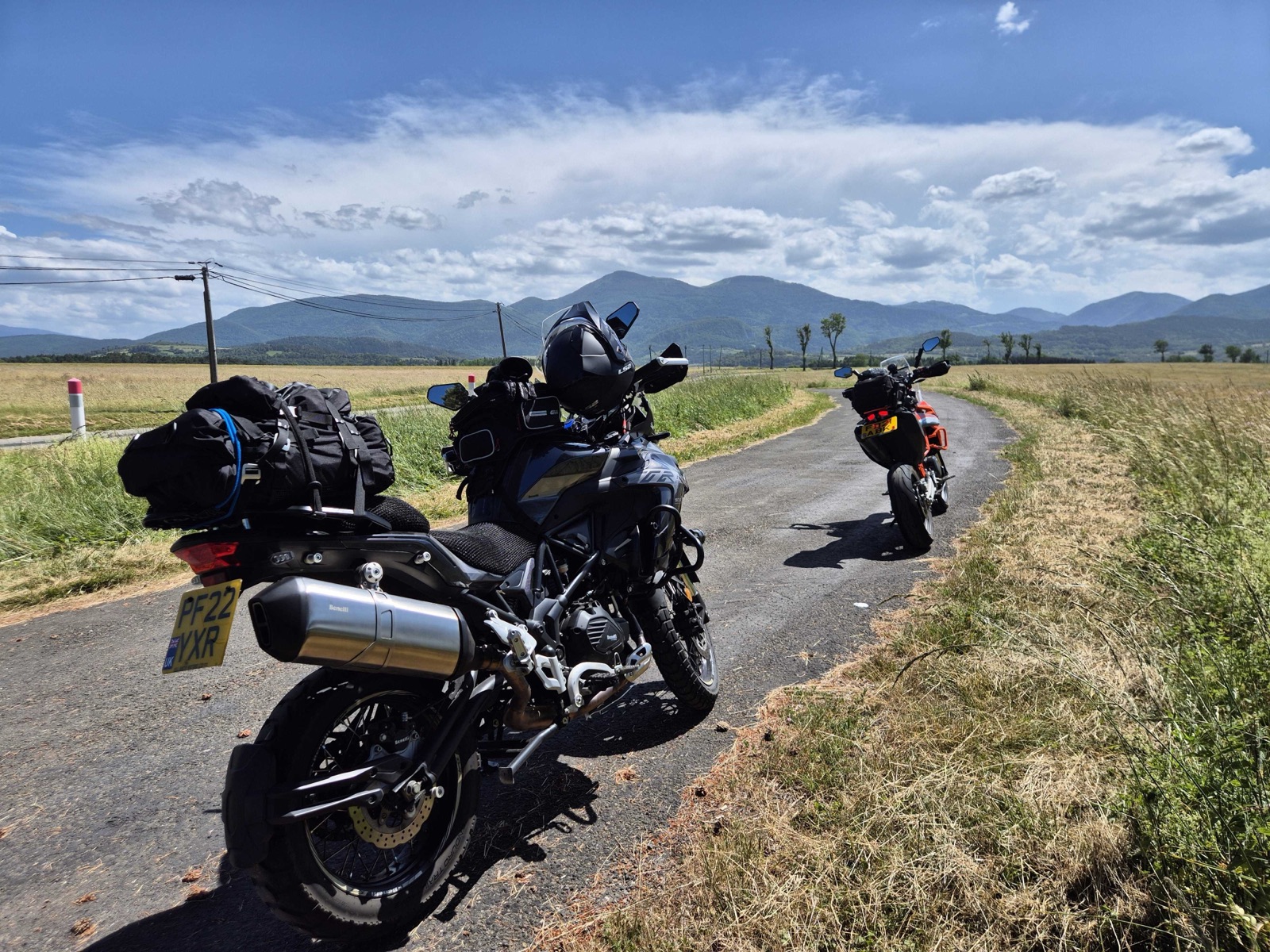
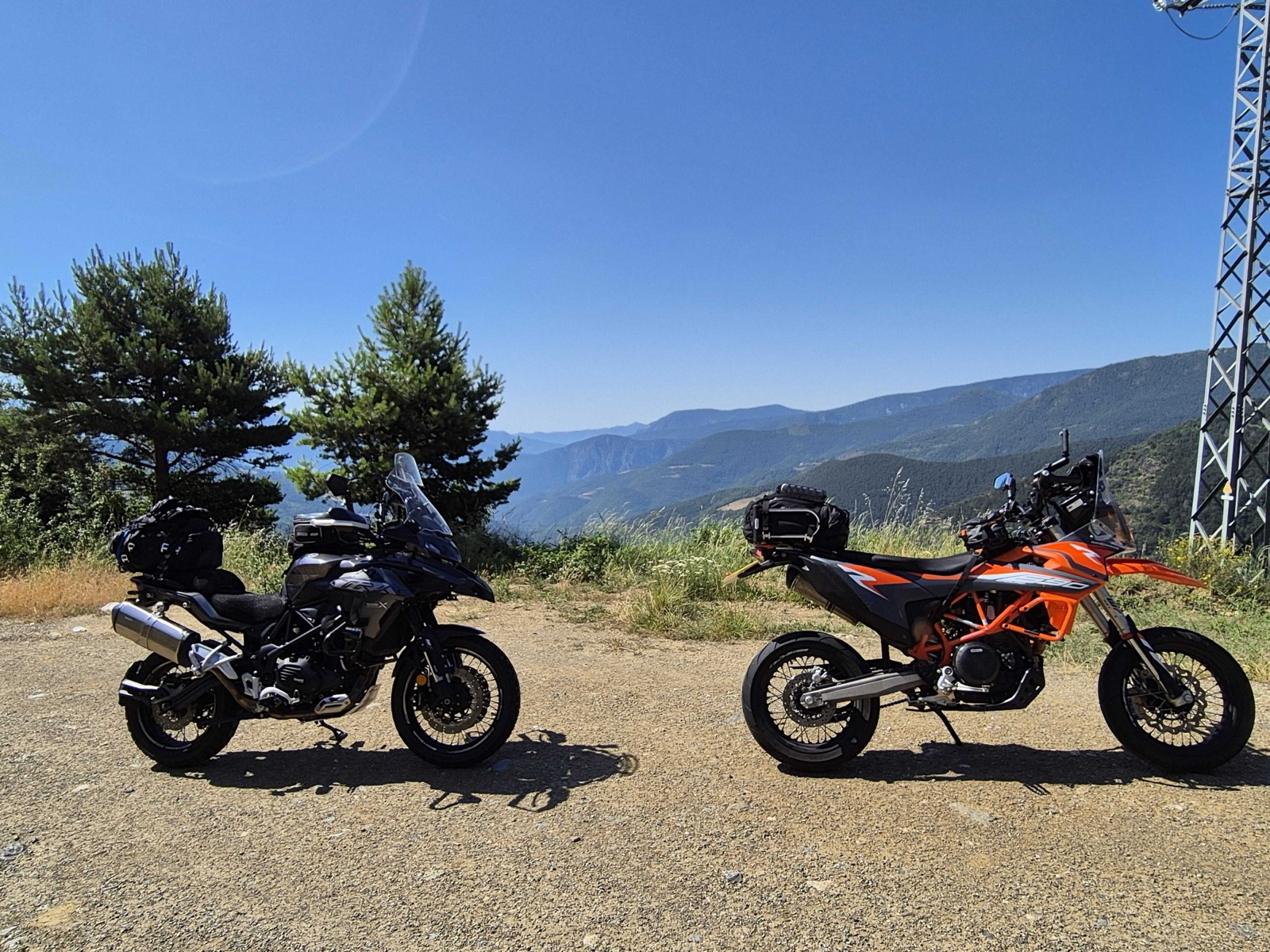
I recently took it from the UK through France and across the Pyrenees into Spain and Andorra, exactly the sort of trip it was made for. Long days, fast roads, mountain passes, poorer surfaces, full luggage and plenty of miles. It never missed a beat, and after 11,000 miles, that's probably the strongest recommendation I can give it.
The TRK uses a 500cc parallel-twin producing around 47bhp and 46Nm of torque. Those figures aren't going to get anyone particularly excited on paper, but in the real world they're absolutely fine, and it's genuinely one of the things I like most about the bike. It isn't a fire-breathing sportsbike, but it doesn't need to be. There's enough performance to make overtaking easy, enough acceleration to enjoy an A-road, and enough top-end to sit comfortably at motorway speeds. You're not constantly thinking about how much power you're missing, you're just riding the bike.
It's smooth enough for long-distance work, though you do get some vibration as the revs rise, not unpleasant, but there. The character suits the bike. It feels like a proper mechanical motorcycle rather than something overloaded with electronics trying to manage everything for you. There's no riding modes, traction control or complicated electronic suspension, just ABS, and honestly, I don't miss the rest.
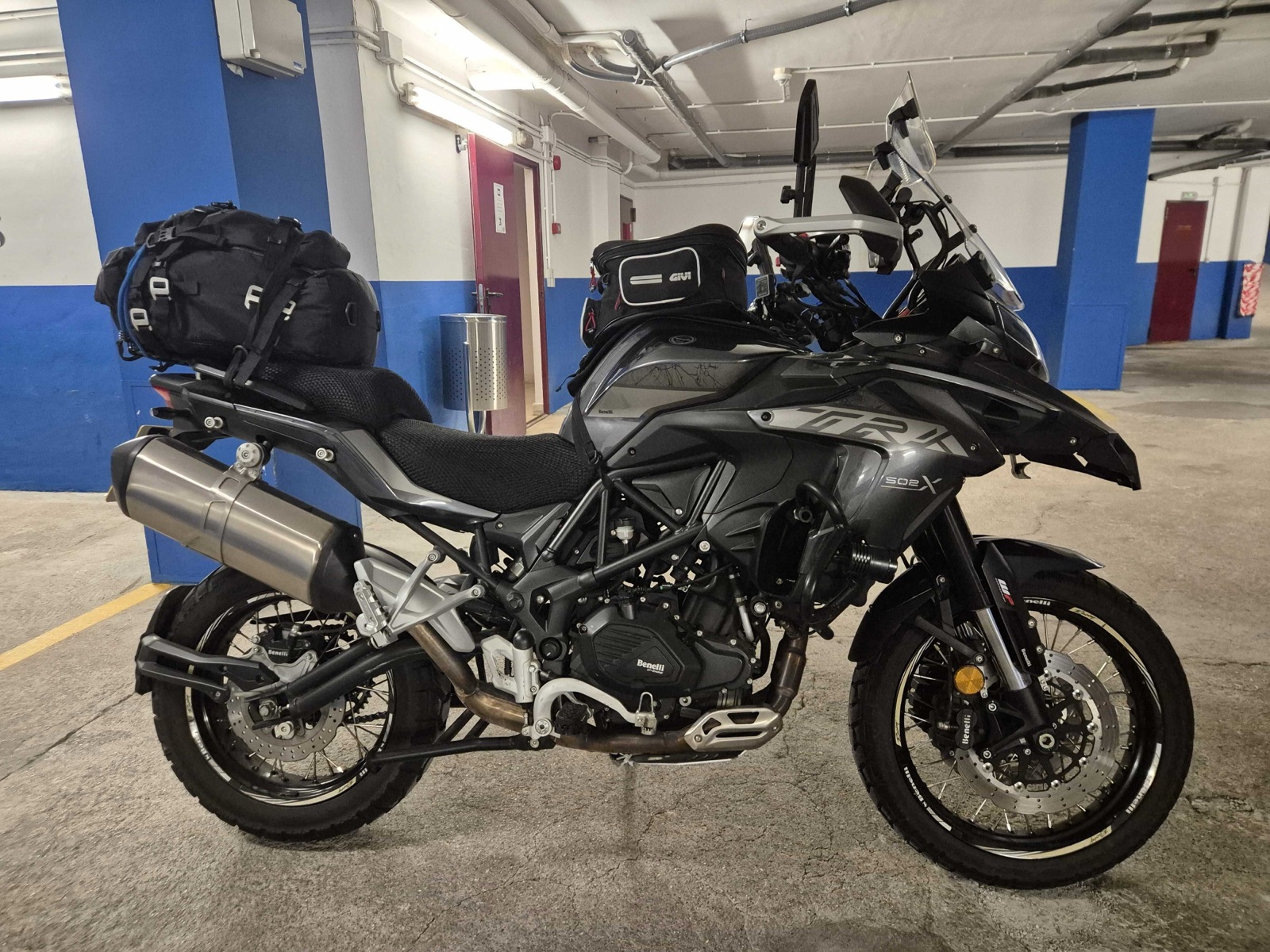
This is where the TRK's weight becomes a positive. Depending on specification and how weight is measured, you're looking at roughly 230kg-plus ready to ride, with the 20-litre tank contributing to that. Benelli's current specification lists a 213kg curb figure, while earlier European documentation gives 235kg in running order, so it's worth checking which model year and market you're looking at when comparing numbers. Whatever figure you use, it's a heavy bike, you notice it picking it up, manoeuvring it in a car park, and definitely off-road.
But on the road, I actually think the weight helps. The TRK feels planted, it doesn't get knocked around by crosswinds or passing traffic, and on fast sweeping roads it has a reassuring stability I really like. You can tip it into a corner, settle into the line and just get on with riding. The chassis isn't particularly sporty, but it doesn't need to be, it's a bike that makes you feel comfortable rather than constantly trying to impress you, and over a long day, that's worth a lot.
The first thing people often say about the TRK 502 X is that it's heavy. They're right. The second thing they often say is that it must handle badly. They're not. It isn't a lightweight, flickable adventure bike, but once it's moving it handles really well. The long wheelbase and weight give it stability, while the 19-inch front wheel doesn't make it feel awkward on the road, and I've ridden plenty of mountain roads on mine that were genuinely enjoyable.
The suspension deserves some credit too. The front forks are relatively simple, the rear shock has adjustment, and the setup gives a good balance between comfort and control, particularly on poor roads and light gravel, where the rear gives good compliance and traction. That's certainly been my experience.
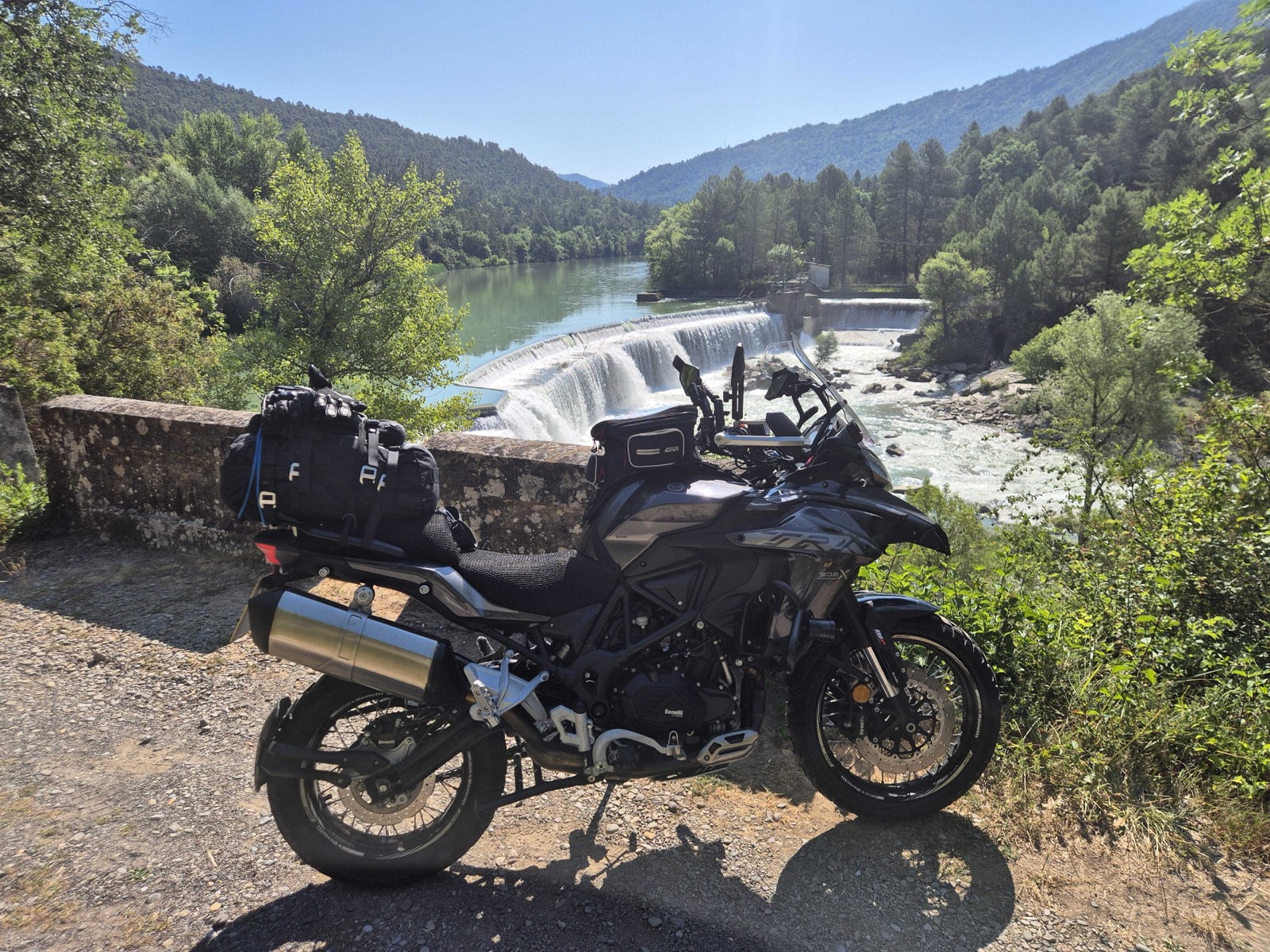
This is where I think the TRK 502 X is seriously underrated. It is a fantastic touring bike. The riding position is comfortable, the seat is comfortable, there's decent wind protection, and the bike feels stable at motorway speeds without the engine working particularly hard at normal cruising speeds. Add a 20-litre fuel tank and Benelli's quoted fuel consumption of around 4.1 litres per 100km on its current specification, real-world consumption obviously varies with speed, load and conditions, and fuel economy is genuinely one of the bike's strong points. You can cover a serious distance without constantly thinking about the next petrol station, which matters when you're travelling through the mountains or somewhere more remote.
My recent European trip was probably the best test I've given the bike. I rode from the UK through France, down through the Pyrenees, into Spain and Andorra, so it saw pretty much everything you'd expect from a proper European motorcycle tour: motorways, French A and B roads, mountain passes, tight bends, long climbs, fast sections, poor surfaces and plenty of hours in the saddle. It never missed a beat, and that's worth mentioning because this wasn't a gentle trip around the local countryside. By 11,000 miles I've had enough experience with the bike to trust it. I don't worry about taking it hundreds of miles from home, and that's ultimately what I want from a touring motorcycle.
Perfectly adequate. Twin discs up front with ABS, a single disc at the rear. They're not going to give you the feel of a high-end Brembo setup, but they stop the bike properly and I've never wished for more braking power during normal road riding. The ABS can also be switched off, useful if you do venture onto loose surfaces, and it's another example of Benelli spending money where it matters rather than loading the bike with expensive electronics.
This is where the TRK makes a lot of sense financially. You get a lot of motorcycle for the money, depending on model year and market, things you'd normally only find on considerably more expensive adventure bikes:
The centre stand in particular is something I really appreciate. It sounds like a boring feature until you're trying to maintain a chain, remove a wheel or deal with a puncture while touring, then it becomes one of those things you wonder why every bike doesn't have.
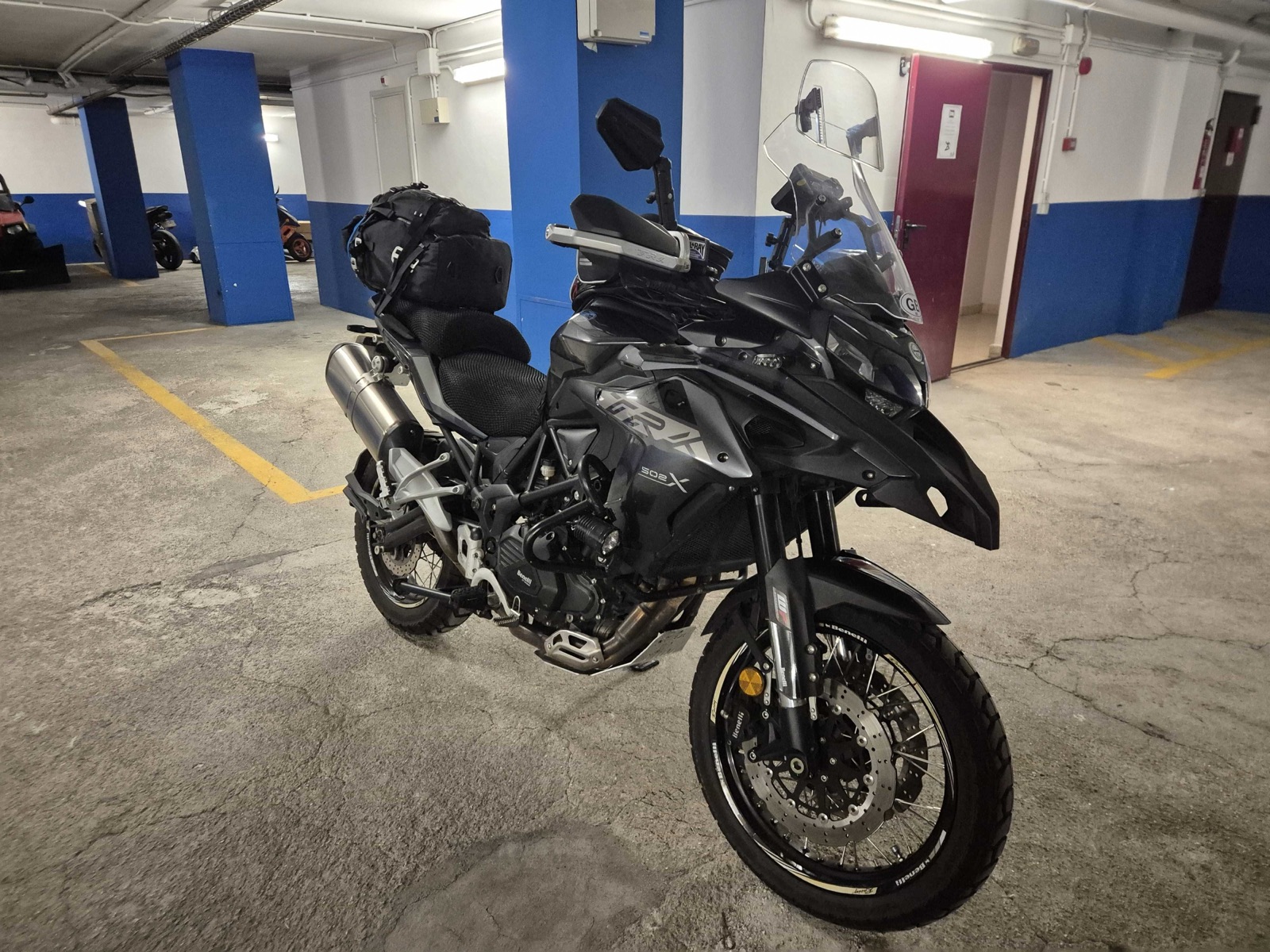
Probably the area where you can really tell this isn't an expensive premium motorcycle. It's basic, no big colour TFT screen, no smartphone integration, no endless configurable displays. Speed, revs, fuel, temperature, trip information, and that's basically it. Would a nicer dash make the bike better? Yes. Would I pay thousands more for the privilege? Probably not.
This is probably the most important part of this review, because the TRK 502 X looks like it should be capable of much more off-road than it actually is. It isn't, at least not for serious trail riding. For green laning, I'd score it low, around 2 out of 10, and that's not an insult, it's just the reality of taking a 230kg-plus motorcycle onto difficult terrain.
Light gravel tracks, hard-packed dirt and forest roads are no problem, and an easy ACT route is where the bike can be genuinely enjoyable. But mud, deep ruts, technical climbs and wet, rocky, deeply rutted green lanes are a different story, there are much better tools for that job. The weight becomes the enemy quickly once the bike starts moving around underneath you, and if it starts falling over, you don't just casually catch it.
Contemporary press tests came to much the same conclusion. Adventure Bike Rider found it comfortable on light trails and gravel but warned that its weight, width, 19-inch front wheel and road-biased setup quickly become limitations once the terrain gets rougher. Cycle News was more blunt, calling it no dirt bike and finding anything beyond a well-maintained dirt road a handful. After 11,000 miles, I completely agree. Benelli's own bigger-engined TRK 702X sibling scores just as poorly in our own Bike Finder, 1/10 for technical off-road and 1/10 for green laning, for exactly the same reasons: weight and limited suspension travel.
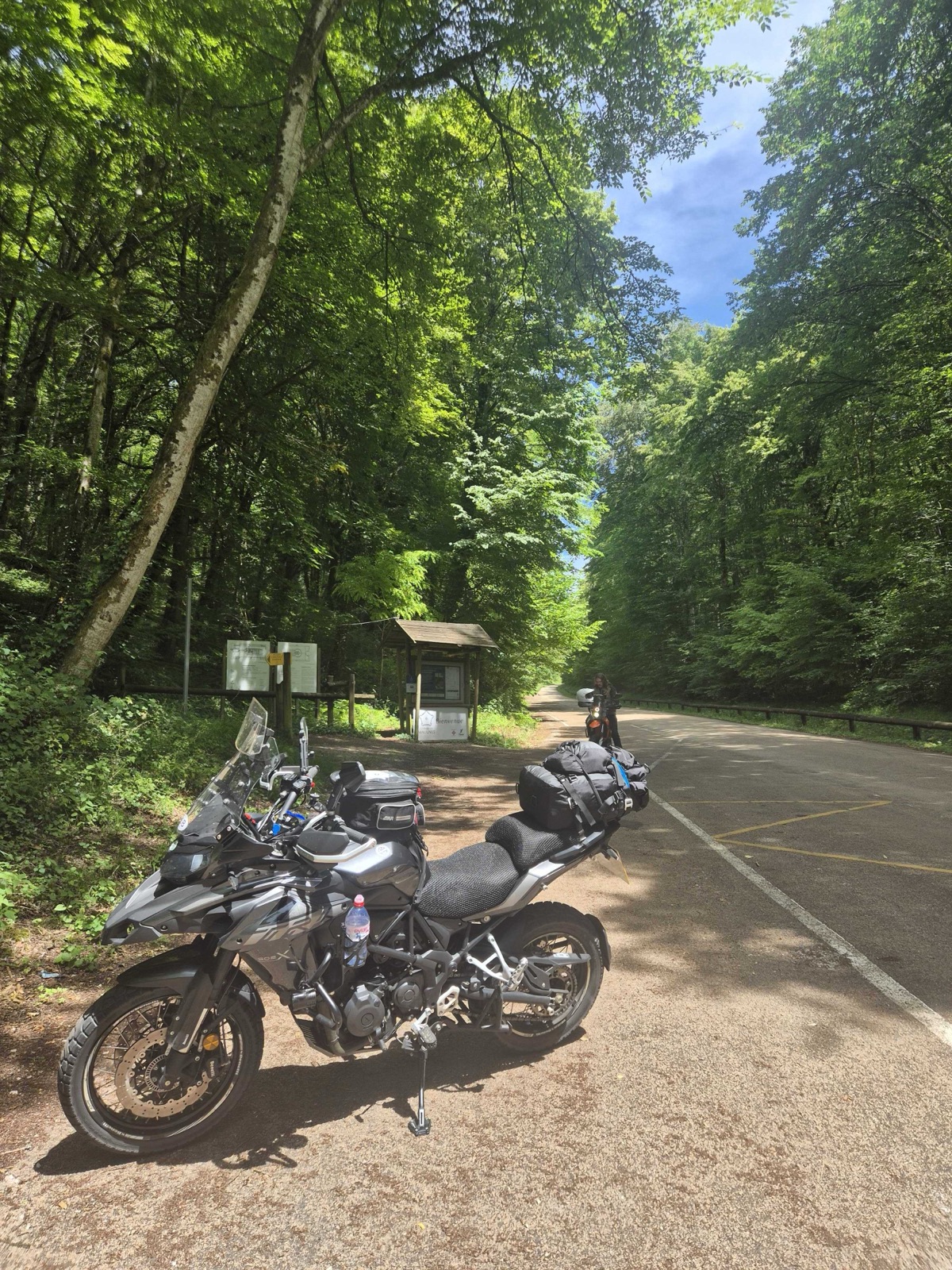
I don't think that makes the TRK 502 X a bad adventure bike, I think it makes it a different type of adventure bike. If your idea of adventure riding is riding a few hundred miles across Europe, finding some mountain roads, taking an unsealed track to a remote campsite, riding gravel through the mountains or exploring the occasional ACT route before heading home again, the TRK makes loads of sense. If your idea is finding the muddiest green lane in Bedfordshire after three days of rain and dragging a 235kg motorcycle through it, buy something else.
This is probably the area where the TRK has surprised me most. Mine has been reliable, very reliable in fact. The recent trip through France, Spain, the Pyrenees and Andorra was completely uneventful mechanically, no drama, no breakdown, no engine problems, no overheating, no strange electrical failure. It just did the job.
That's consistent with a lot of the longer-term owner experience I've found. There are certainly reports of small issues and complaints about finish and corrosion, particularly on earlier bikes, but there isn't the widespread mechanical horror story some people seem to expect from a Chinese-built motorcycle. AutoTrader's used-bike review notes the model has been around since 2017 without major widespread reliability concerns, while flagging corrosion as something owners should watch for, particularly if the bike sees winter use. There are also genuinely long-term examples out there, one owner has documented more than 32,000km of daily use and travel across 10 countries, on- and off-road. None of that means every TRK is perfect, but it does mean the old assumption that a Chinese-built motorcycle automatically equals unreliable doesn't really stand up to the evidence.
The weight is the obvious one, there's no getting around it. The finish also isn't quite at Japanese levels, I've seen owners report corrosion and finish issues, particularly around fasteners and exposed components, worth keeping an eye on if you ride through winter or salty conditions. The dashboard is basic, the engine isn't particularly exciting if you're coming from a bigger-capacity bike, and despite the X badge and adventure-bike looks, you shouldn't confuse it with a proper off-road machine. After 11,000 miles, none of that bothers me much, because they're all compromises I understand going in.
Worth addressing, because the TRK gets a lot of criticism simply for being made in China, and after owning one for 11,000 miles I think that's a fairly lazy way of judging it. Is it finished to the same standard as a premium Japanese motorcycle? No. Does every component feel expensive? No. Would I expect the same long-term reputation as a Honda? No. But has mine actually proven unreliable? No, quite the opposite, it's taken me around the UK and across Europe through the Pyrenees and simply got on with it. At some point, actual ownership experience has to count for something.
I've owned the bike long enough now that the novelty has completely worn off, and that's important, you can convince yourself almost anything is brilliant during the first few hundred miles. 11,000 is different. You know the bike's weaknesses, you've ridden it tired, loaded, in bad weather, for hours, on motorways and mountain roads, and you know whether you trust it. I trust mine. And I still enjoy riding it.
Touring, long motorway and A-road days, and a mixed European trip with the occasional gravel road or ACT-style route thrown in. Riders who want big-bike presence, comfort and equipment without big-bike money.
Technical off-road, deep mud or genuine UK green laning. Anyone wanting a lightweight, flickable trail bike, or expecting a CRF300L when the trail turns into a mud bath.
Yes, but I'd qualify that. It's an adventure-styled touring bike with genuine light off-road ability, rather than a lightweight adventure bike that happens to be good on the road. That's an important difference, and it's exactly what I've used mine for. The TRK 502 X is at its best when you spend most of your time on tarmac and occasionally decide to disappear down a gravel road. For that job, it's bloody good.
My verdict
It's not a dirt bike, it's not a lightweight green-laning machine, and it was never really designed to be either. What it is is a very good, very comfortable, surprisingly capable all-round motorcycle. Planted on the road, stable at speed, comfortable enough to ride all day, loaded with equipment for the money, and 11,000 miles in, it's given me no mechanical reason to doubt it, including a full trip through France, across the Pyrenees and into Andorra. As a green-laning tool? Not really, no. As an all-rounder that can tour Europe all day and still take you down a gravel track when the road runs out? Absolutely.
Holloway's map shows every legal green lane and byway's difficulty, surface and length for free, so you can see whether a route actually suits a heavier all-rounder like this one, or needs something lighter, before you're committed to it.
Open the mapThis is a genuine first-hand ownership review, not a manufacturer-supplied test. It's not the bike I reach for to grade lanes for Holloway, but it's exactly the bike I reach for when the plan is putting big miles in and seeing somewhere new. Your own experience may vary with spec, tyres and how the bike's been maintained.