

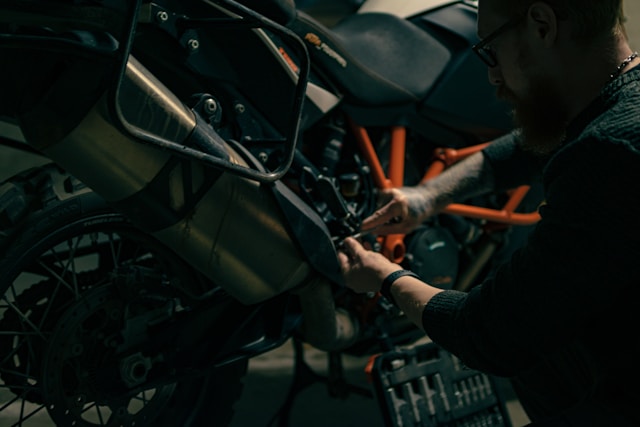
Breaking down on a B-road is an inconvenience. Breaking down three miles into a byway, gate shut behind you, no phone signal and mud past your ankles, is a genuinely different problem. It's worth thinking about before it happens rather than after, on three fronts: whether your cover actually reaches you, what to carry so you don't need it in the first place, and which fixes are worth knowing yourself.
Does your breakdown cover actually work out there
Here's the part that catches people out: a BOAT being a legal public road doesn't automatically mean standard breakdown cover treats it the same way as a B-road. Two separate things can both be true, your policy might genuinely cover you there in principle, and a recovery truck might still not be able to physically reach you. Several providers write real exclusions around exactly this, Green Flag's own terms, for instance, exclude assistance if you're stuck in mud, snow or floodwater after leaving the road surface, which describes an ordinary bad day on a green lane fairly precisely.
The honest fix is the same one we've recommended for insurance in do you need tax, MOT and insurance to ride a legal green lane: check directly rather than assume. Email your provider and ask plainly whether unsurfaced BOATs and UCRs are covered, or upload your policy document to an AI chatbot and ask it to flag anything relevant to off-road recovery, mud, or unsurfaced tracks, then confirm anything it finds with the provider before relying on it. Some riders carry a second, dedicated off-road recovery policy alongside their normal cover for exactly this reason, worth weighing against how remote your usual routes actually get.
What's actually worth carrying
A sensible kit doesn't need to be heavy. The genuinely useful basics: a tyre repair or plug kit with a compact pump (CO2 canisters or a small electric pump both work), a spare inner tube if you're running tubed tyres, a multitool with the right bits for your bike, a tow strap, zip ties and a roll of gaffer tape, a couple of spare fuses, and a small first aid kit. None of it is expensive or bulky, and most of it lives permanently in a tail bag rather than being remembered fresh each ride.
Fixes worth actually knowing before you need them
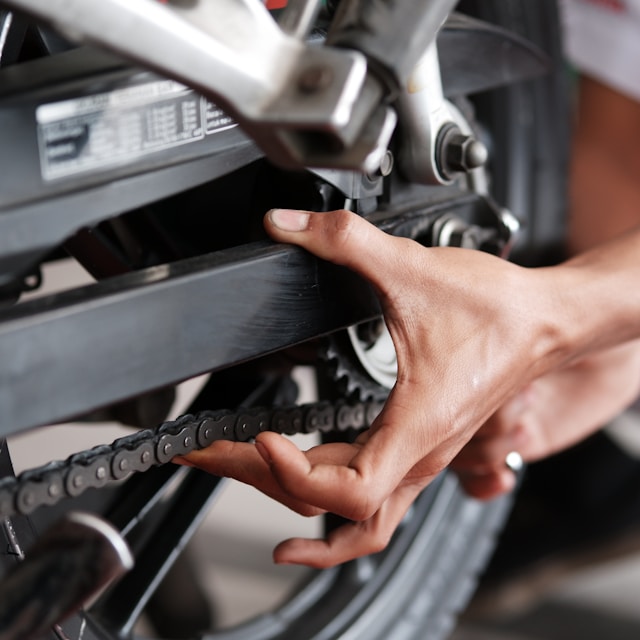
You don't need to be a mechanic, but a handful of skills turn a ruined day into a twenty-minute stop. Plugging a puncture and getting the tyre back to a rideable pressure. Fitting a quick link to fix a snapped chain, or simply refitting one that's jumped off, both genuinely common and genuinely fixable trailside. Clearing a waterlogged air filter or drying out a fouled spark plug after a deeper ford than expected. And straightening or at least assessing a bent lever or peg well enough to limp home. None of these take long to learn, and there are good video walkthroughs for every one of them, worth watching before the day you actually need it, not during.
What actually goes wrong on a green lane
The failures here have a different shape to a road breakdown. Punctures from flints and sharp stone are far more common than on tarmac. Fords and standing water cause real water-ingestion problems, a hydrolocked engine or a drowned electrical connector, more often than any moving part failing outright. Chains and sprockets pick up mud and grit that wears them faster than road riding ever would. And a genuine drop, more likely here than on a road, can snap a lever or peg even when the bike itself is otherwise fine to ride on. Worth remembering too that not every stoppage is mechanical, simply getting properly stuck in deep mud or a steep, greasy climb is its own version of the same problem, and it's exactly the scenario a recovery truck is least likely to reach, which is precisely why riding with at least one other person, and carrying a tow strap for a self-recovery, matters as much as any tool in the kit.
Check a lane's hazards before you ride it, browsing the map and reading what other riders have already logged is free, no account needed.