

For green lanes, use a lube made for mud and water, like Muc-Off's Off-Road All-Weather. For road miles, a dry-film lube like Castrol Chain Lube Racing stays cleaner. Clean the chain whenever it looks dirty, and lube it every 300 miles or after any wet ride. That's most of it. The rest of this guide is which products to buy and how to tell when a chain is worn out.
Everything below is from an established brand and safe on O-ring, X-ring and Z-ring chains, which covers almost every modern bike. Specs come from each maker's own product page or data sheet, and prices are rough UK street prices on 22 September 2026.
The "Check price" buttons are Amazon affiliate links. If you buy through one, Holloway earns a small commission at no extra cost to you, which goes toward keeping the site and the map running. It doesn't change what we recommend.
The best chain lubes
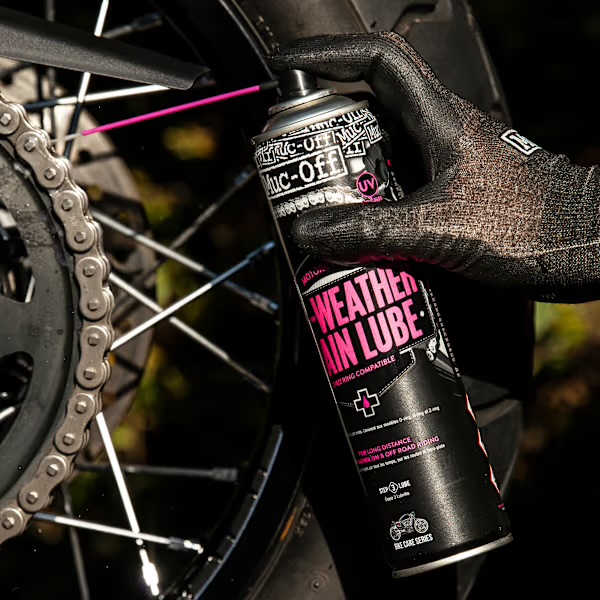
Muc-Off Off-Road All-Weather Chain Lube
Made for mud, water and grit, and safe on every sealed chain. A UV dye shows under a torch where you've missed.
- Type
- Synthetic, ceramic
- Seals
- O, X and Z-ring safe
- Best in
- Mud, wet, mixed
- Size
- 400ml
Pros
- Built for off-road, all-weather use
- UV dye shows your coverage
- Safe on every sealed chain
Cons
- Like any wet-leaning lube, it collects grit on dusty lanes
- Muc-Off doesn't publish a set time, so give it overnight
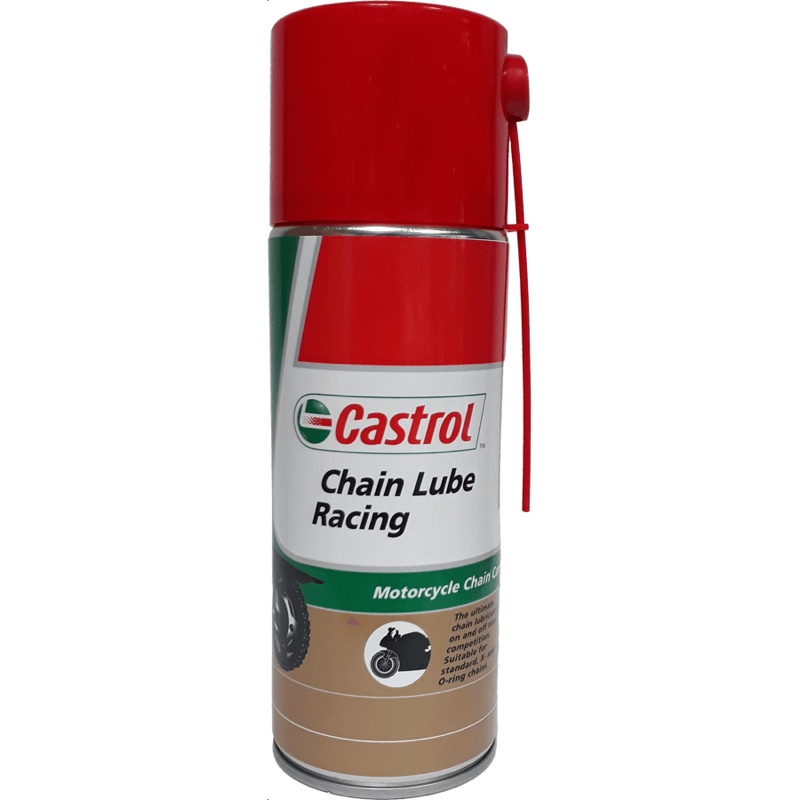
Castrol Chain Lube Racing
A fully synthetic lube that dries to a thin film, so it stays cleaner than an oily lube on long road miles. One of the best-rated lubes on sale in the UK.
- Type
- Synthetic, dry film
- Seals
- O, X and Z-ring safe
- Best in
- Road, touring
- Set time
- 10 to 20 min
Pros
- Dries to a film that flings very little
- Rated 4.9 out of 5 from over 100 buyers at Sportsbikeshop
- Fair price for the quality
Cons
- Builds up if you over-apply it
- Less staying power than a wet lube in heavy rain
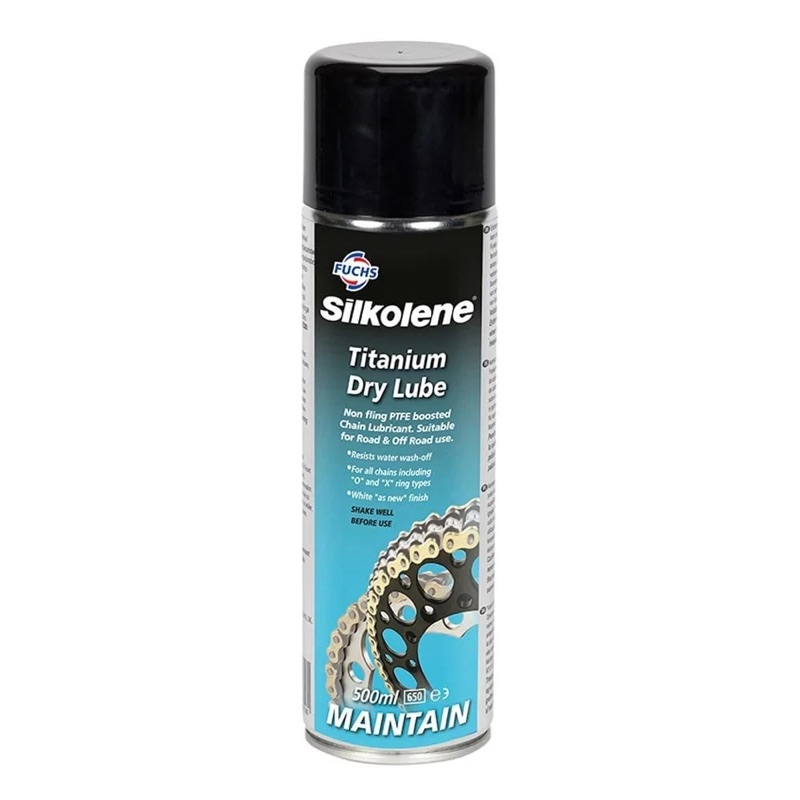
Silkolene Titanium Dry Lube
A PTFE dry lube for summer lanes, when chalk and sandy tracks turn to dust. Dry lubes hold far less grit than oily ones.
- Type
- PTFE dry lube
- Seals
- O and X-ring safe
- Best in
- Dry, dusty
- Size
- 500ml
Pros
- Dry film holds less dust and sand
- Flings very little
- Larger 500ml can
Cons
- Washes off in the wet, so relube after rain
- Priciest lube here
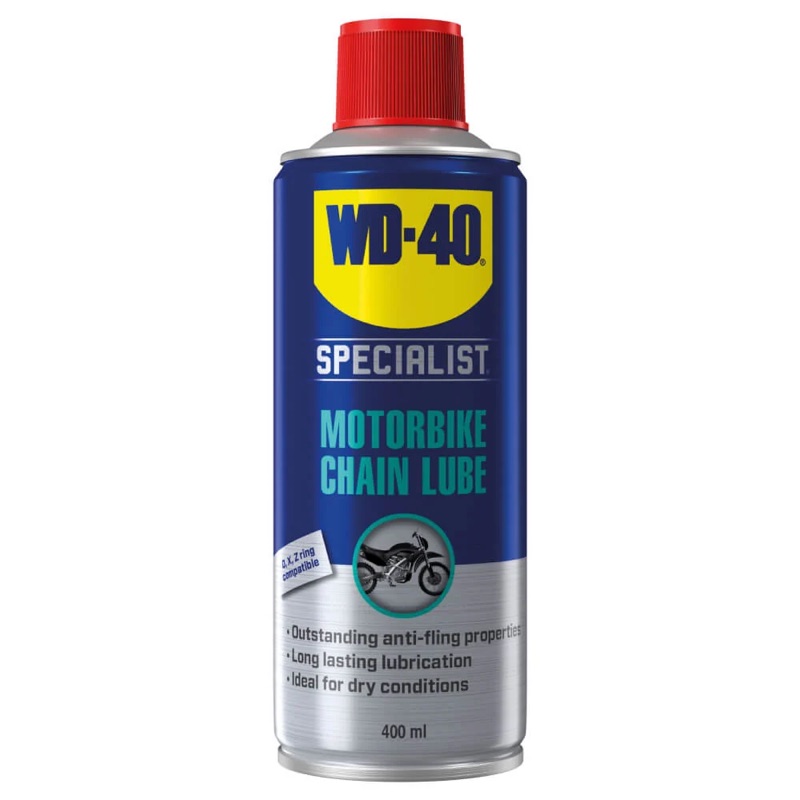
WD-40 Specialist Motorbike Chain Lube
A proper chain lube, not the blue-and-yellow multi-use can. It goes on thin, gets into the rollers, then thickens up. WD-40 pitches it at dry conditions.
- Type
- Synthetic, penetrating
- Seals
- O, X and Z-ring safe
- Best in
- Dry conditions
- Size
- 400ml
Pros
- Cheapest lube here
- Low fling, according to WD-40
- Also comes in a 100ml can that fits a tank bag
Cons
- Made for dry conditions, so relube after rain
- No set time given, so leave it to dry fully
- Easily confused with ordinary WD-40, which isn't a chain lube

Scottoiler vSystem
Oils the chain a drip at a time as you ride, so you never have to remember. Ideal for long tours and big-mileage riders.
- Type
- Vacuum-driven oiler
- Oils
- A drip at a time
- Best in
- Touring, high mileage
- Fitting
- DIY kit
Pros
- Lubes the chain for you every ride
- Runs off engine vacuum, so no wiring
- Well established UK brand
Cons
- Fitting is fiddly
- Set the flow too high and oil sprays onto the wheel
The best chain cleaners
Lube on a dirty chain just glues the grit in place, so cleaning matters as much as lubing. Pair any cleaner with a soft-bristled chain brush. The Oxford Chain Brush is about £6, and its three-sided head scrubs the top and both sides of the chain at once. Never use a wire brush, which damages the seals.
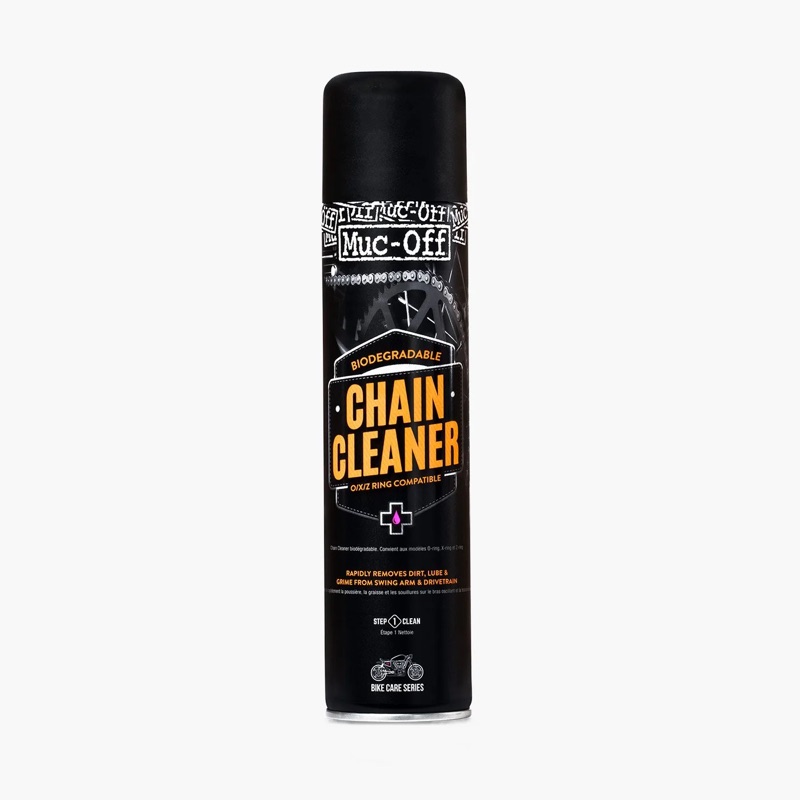
Muc-Off Motorcycle Chain Cleaner
Sprays on, lifts the old lube and road muck, and rinses off with water. Very little scrubbing needed.
- Method
- Spray, scrub, rinse
- Seals
- O, X and Z-ring safe
- Biodegradable
- Yes
- Size
- 400ml
Pros
- Cuts through grime quickly
- Rinses off with plain water
- Biodegradable
Cons
- Needs a rinse and a full dry before you can lube
- Pricier per can than Motul's
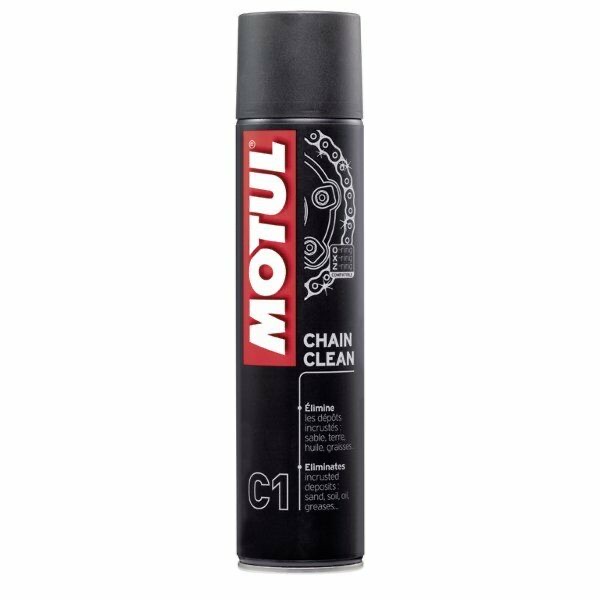
Motul C1 Chain Clean
No rinsing: spray it on, leave it five minutes, brush and wipe. Quick when you're cleaning in a car park or garage with no hose.
- Method
- Spray, soak, wipe
- Seals
- O, X and Z-ring safe
- Rinse needed
- No
- Size
- 400ml
Pros
- No water or hose needed
- Cheapest cleaner here
- Rated 5 out of 5 from 64 buyers at Sportsbikeshop
Cons
- Heavy caked mud still wants a rinse and a brush first
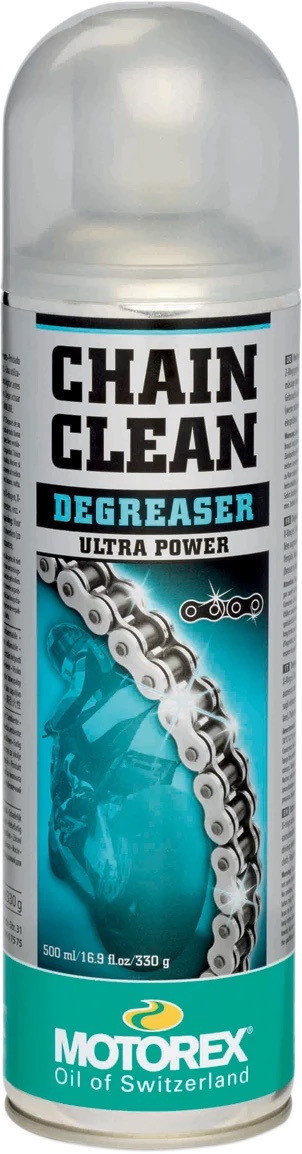
Motorex Chain Clean 611
The one for a chain that's been left caked after a wet winter. Strong enough to shift baked-on grime the others leave behind.
- Method
- Spray, soak, wipe
- Seals
- Tested on O and X-ring
- Best for
- Heavy grime
- Size
- 500ml
Pros
- Very strong on old, caked lube
- Larger 500ml can
Cons
- Costs the most
- Overkill for a chain you clean regularly
What we use, and why
We use Muc-Off's chain cleaner and chain lube. Lane riding means our chains come home properly filthy, so we do one thing to make the cleaner go further.
"I often give it a quick spritz of Elbow Grease kitchen degreaser first. It shifts most of the dirt and saves me some of the proper chain cleaner."
Mat Stuckey
It does the bulk of the hard work first, then the proper cleaner deals with what's left. A can of chain cleaner doesn't go far on a chain that's been through a few water crossings.
We use Elbow Grease because it isn't harsh enough to strip O-rings or seals. That's the thing to watch if you try this with a different degreaser: RK, the chain maker, warns against caustic chemicals, and some heavy-duty degreasers are exactly that. Whatever you use, rinse it off, then clean properly with a chain cleaner.
Match the lube to how you ride
There's no single best chain lube, only the best one for your conditions. Oily lubes stick through rain and mud but pick up grit. Dry and wax lubes stay clean in dust but wash off in the wet. In Bennetts BikeSocial's test of 55 lubes, the dry and wax types flung the least and held the least sand.
| You mostly ride | Use | Our pick |
|---|---|---|
| Muddy, wet green lanesA tacky lube that stays on through water crossings | Wet or all-weather | Muc-Off Off-Road |
| Dry, dusty summer lanesA dry film that doesn't turn into grinding paste | Dry or PTFE | Silkolene Titanium Dry |
| Road and touringClean, low fling, lasts on long miles | Dry-film synthetic | Castrol Racing |
| Big mileage, all yearOils itself, so you never forget | Automatic oiler | Scottoiler vSystem |
How often to clean and lube
Chain makers give a base interval, and how you ride changes it more than anything else.
| Riding | Lube | Clean |
|---|---|---|
| Dry road riding | Every 250 to 300 miles | Every 300 to 600 miles, or when it looks grimy |
| Rain or wet roads | After every wet ride | Whenever road grime builds up |
| Muddy lanes and water crossings | After every ride | After every ride |
| Dry, dusty lanes | After every ride, once it's wiped | Wipe off the dust paste every ride |
| After washing the bike | Every time | Already done |
The road figures come from DID and RK, who both say clean every 500km (about 300 miles), and Regina, who says lube every 400km. Owner's manuals tell you to lube more often after rain, off-road riding or a wash. An automatic oiler replaces most of the lubing, but not the cleaning.
How to clean and lube a chain
- Get the back wheel off the ground. A paddock stand or centre stand, engine off, gearbox in neutral, so you can turn the wheel by hand. Never lube with the engine running.
- Clean it. Spray the cleaner onto the chain, scrub with a soft chain brush while you turn the wheel, then rinse or wipe as the cleaner's instructions say. Let it dry fully.
- Lube the inside of the lower run. Spray where the rollers meet the sprockets, between the side plates, turning the wheel slowly so every link gets some. A little goes a long way.
- Let it set. Most lubes need 10 to 20 minutes before riding. Better still, lube at the end of a ride and leave it overnight, while the chain is still warm.
- Wipe off the excess. Anything on the outside of the plates just flings off or collects dirt.
What never to use: petrol, brake cleaner, carb cleaner, thinners, a wire brush, or a steam cleaner. A pressure washer aimed at the chain can force water past the seals. Paraffin (kerosene) splits the experts: DID and RK say no, while Regina and Yamaha's Ténéré 700 manual allow it with a soft brush. If you'd rather not pick a side, stick to a dedicated chain cleaner.
What to check while you're down there
Cleaning is the best time to spot a worn chain, because you can actually see it. Check these every time.
Slack. Push the middle of the lower run up and down and measure the total movement. Road bikes are often around 30 to 45mm, but trail and adventure bikes run more to allow for suspension travel: Yamaha specifies 43 to 48mm on the Ténéré 700, and Honda 50 to 55mm on the CRF300L. Always use your own bike's figure, from the manual or a sticker on the swingarm.
Tight spots. Turn the wheel and check the slack at several points. If it's tight in one place and loose in another, the chain has worn unevenly and is on its way out.
Stiff or kinked links. Watch the chain as it comes off the rear sprocket. Any link that stays bent instead of straightening is seized.
Rust and damaged seals. Orange rust on the rollers, or O-rings that are missing, flattened or split, mean the grease inside is going.
The pull test. Grab the chain at the back of the rear sprocket and pull it away from the teeth. If it lifts clear of a tooth, the chain has stretched. Check at a few points round the sprocket.
Sprocket teeth. Teeth that have worn into hooks or shark fins, rather than even, rounded points, need replacing.
If any of these fail, replace the chain and both sprockets together. A new chain on worn sprockets wears out fast, and DID, RK and most workshops all say to do them as a set. A worn chain can snap, so don't put this off before a long ride or a day on the lanes.
Mud and water are hard on chains, and a lane day can take more out of one than a week of commuting. For the rest of your post-ride routine, see our guide to cleaning your bike after green laning. Or find your next ride on Holloway, with every lane's current legal status shown before you set off.
FAQ
How often should I lube my motorcycle chain?
Every 250 to 300 miles on dry roads, and after every ride in the rain, through mud, or after washing the bike. Chain makers DID and RK both base their advice on about every 500km.
Can I use ordinary WD-40 on my chain?
Not as a lube. The standard multi-use WD-40 isn't made for chains. WD-40's Specialist Motorbike Chain Lube is a separate, proper chain lube.
Is paraffin safe for cleaning an O-ring chain?
Chain makers disagree. DID and RK say don't use it because it can harm the seals, while Regina and Yamaha allow it with a soft brush. A dedicated chain cleaner avoids the question entirely.
Should I lube my chain before or after a ride?
After. The chain is warm, so the lube soaks into the rollers, and it has time to set so it doesn't fling off when you ride.